中文简体
中文简体 Español
Home / Resources / Industry News / Ensuring Quality and Versatility in High Precision Components Processing Metal Stamping Parts
Industry News
Feb 25,2026
Ensuring Quality and Versatility in High Precision Components Processing Metal Stamping Parts
Content
The Importance of Material Versatility in Stamping
One of the most frequently asked questions regarding metal stamping is, "Can this process accommodate the specific material required for my application?" The answer is a resounding yes, provided the manufacturer has the right expertise. The capability to process a diverse range of metals is what defines a top-tier provider of High Precision Components Processing Metal Stamping Parts.
Comprehensive Material Selection
Different applications demand different material properties. For structural strength and formability, Carbon steel and general steel are often the go-to choices. However, when corrosion resistance is a priority, particularly in harsh environments, stainless steel becomes essential. Industries focusing on weight reduction without compromising strength—such as automotive and aerospace—frequently utilize aluminum and specialized alloys.
Moreover, the processing of iron remains relevant for heavy-duty applications, while brass is favored for its electrical conductivity and aesthetic appeal in decorative hardware. For the most extreme environments involving high heat and corrosive chemicals, titanium is the material of choice. A facility specializing in High Precision Components Processing Metal Stamping Parts must have the tooling and technical know-how to handle all these materials efficiently, ensuring that the intrinsic properties of each metal are preserved during the stamping process.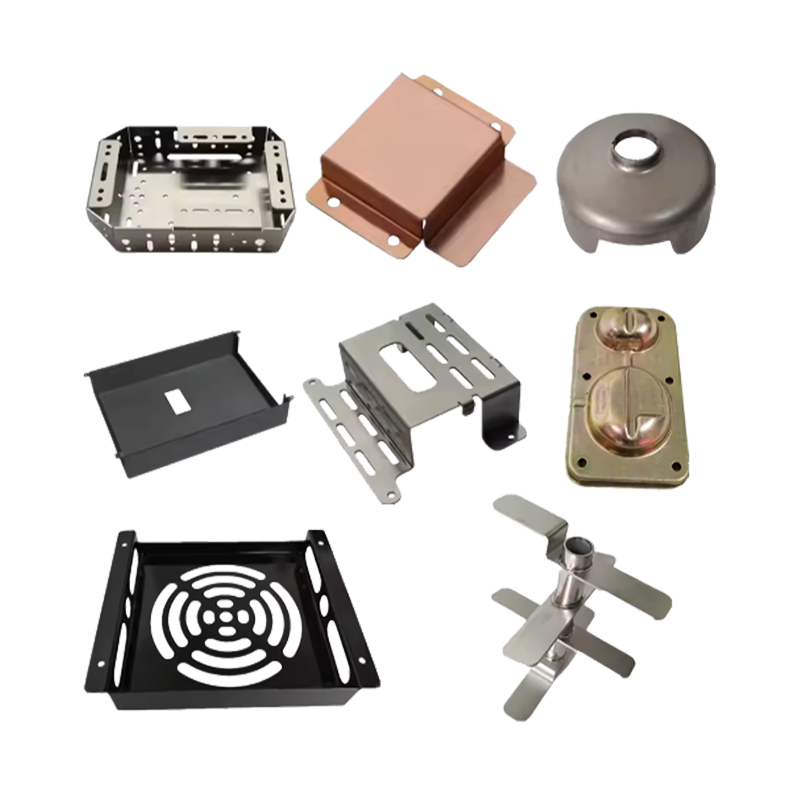
Precision and Dimension: "As Per Design"
In mass production, "close enough" is not good enough. The phrase "Dimension: As per design" is simple in wording but immense in implication. It signifies a commitment to engineering exactitude.
Meeting Tight Tolerances
The core value of High Precision Components Processing Metal Stamping Parts lies in the ability to replicate complex geometries with microscopic accuracy, millions of times over. Advanced stamping presses utilize progressive dies and computer-aided manufacturing (CAM) to ensure that every part—whether it is a small connector or a large structural bracket—matches the CAD drawings perfectly.
Dimensions "as per design" means that interlocking parts fit together seamlessly without the need for costly post-processing adjustments. This precision reduces assembly times and eliminates the risk of mechanical failure caused by dimensional discrepancies. Whether the design calls for micro-thin tolerances for electronic components or robust shapes for industrial machinery, high-precision processing ensures consistency across the entire production batch.
The Critical Role of Surface Treatment
While the structural form of the part is established during stamping, the longevity and performance are often determined by the surface treatment. The choice of finish affects corrosion resistance, wear resistance, friction, and aesthetics. Manufacturers of High Precision Components Processing Metal Stamping Parts offer a variety of treatments to meet specific operational needs.
Protective and Aesthetic Finishes
For components requiring a hard, shiny surface and resistance to oxidation, chrome/nickel plated finishes are standard. These are commonly seen in automotive trim and hardware. If a component needs to be durable yet colored without using liquid paint, powder coated finishes provide a tough, attractive layer that resists chipping and fading.
Functional Enhancements
In applications where surface smoothness is critical to reduce friction, polished finishes are employed. For non-ferrous metals like aluminum, anodized treatment is crucial; it increases corrosion resistance and allows for dyeing the metal into various colors while maintaining a metallic feel. Finally, traditional painting remains a versatile option for protecting large surface areas and providing specific color coding for industrial machinery.
By offering this wide array of surface treatments—chrome/nickel plating, powder coating, polishing, anodizing, and painting—suppliers of High Precision Components Processing Metal Stamping Parts ensure that the finished product is ready for the specific environmental challenges it will face in the field.
Why High Precision Processing Matters
Choosing the right partner for metal stamping is a strategic decision. It impacts the supply chain reliability, product quality, and ultimately, the end-user's satisfaction.
- Cost Efficiency: High-speed stamping produces parts at a significantly lower unit cost compared to CNC machining or casting, especially for large volumes.
- Material Optimization: With the ability to use everything from carbon steel to titanium, manufacturers can select the most cost-effective material that still meets engineering requirements.
- Quality Assurance: Adhering to "dimensions as per design" ensures that parts fit right the first time, reducing assembly line bottlenecks.
- Product Longevity: Proper surface treatment extends the life of the part, reducing warranty claims and enhancing brand reputation.
Conclusion
The production of High Precision Components Processing Metal Stamping Parts is a sophisticated interplay of material science, engineering precision, and finishing technology. From the robust strength of carbon steel to the lightweight properties of aluminum and titanium, and from the protective shield of chrome plating to the durability of powder coating, every aspect of the process is tailored to deliver excellence. For businesses looking to maintain a competitive edge, partnering with a manufacturer that offers this level of versatility and precision is not just an option—it is a necessity.
Why Custom Deep Drawn Stainless Steel Parts are Essential for High-Precision Manufacturing
How to Maximize Kitchen Space and Safety with a Stainless Steel Two Burner Gas Stove?
related products
Send An Inquiry
Don't hesitate to contact when you need us!
Whether you want to become our partner or need our professional guidance or support in product selections and problem solutions, our experts are always ready to help within 12 hours globally
contact Us
Phone:+86 139-5824-9488
FAX :+86 574-86150176
E-mail: [email protected] [email protected]
Address: Unit 2, Building 19, Zhichuangzhizao Park, Chengdong Industrial Zone, Xiangshan, Ningbo,315705, Zhejiang, China
Product Category
Mobile