中文简体
中文简体 Español
Home / Resources / Industry News / Why is Custom Deep Drawing the Secret to High-Performance Metal Components?
Industry News
Jan 22,2026
Why is Custom Deep Drawing the Secret to High-Performance Metal Components?
Content
- 1 What Exactly is Deep Drawing and How Does it Benefit You?
- 2 Why Stainless Steel is the Gold Standard for Custom Parts
- 3 From Concept to Reality: Customization Based on Drawings and Samples
- 4 The Importance of In-House Mold Design and Production
- 5 A World of Material Choices Beyond Stainless Steel
- 6 Adding the Final Touch: Surface Finishing Options
- 7 Ensuring Every Part Meets the Design
- 8 Finding Your Manufacturing Partner
In the modern manufacturing landscape, businesses are moving away from "off-the-shelf" solutions and leaning heavily toward precision-engineered parts. If you have ever looked at a sleek kitchen sink, a seamless fire extinguisher canister, or a complex automotive housing, you have seen the results of a process called deep drawing.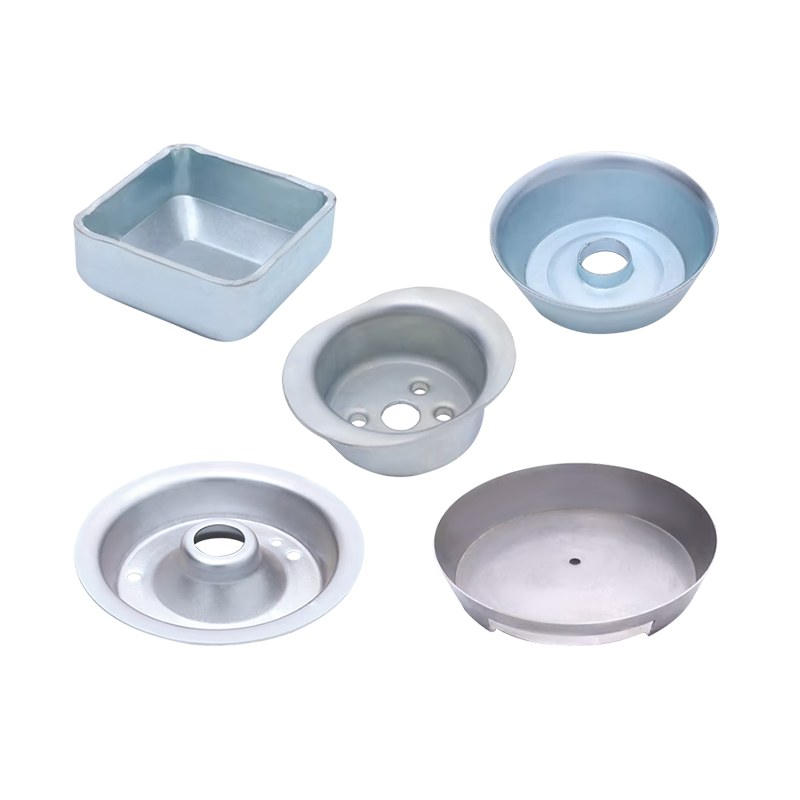
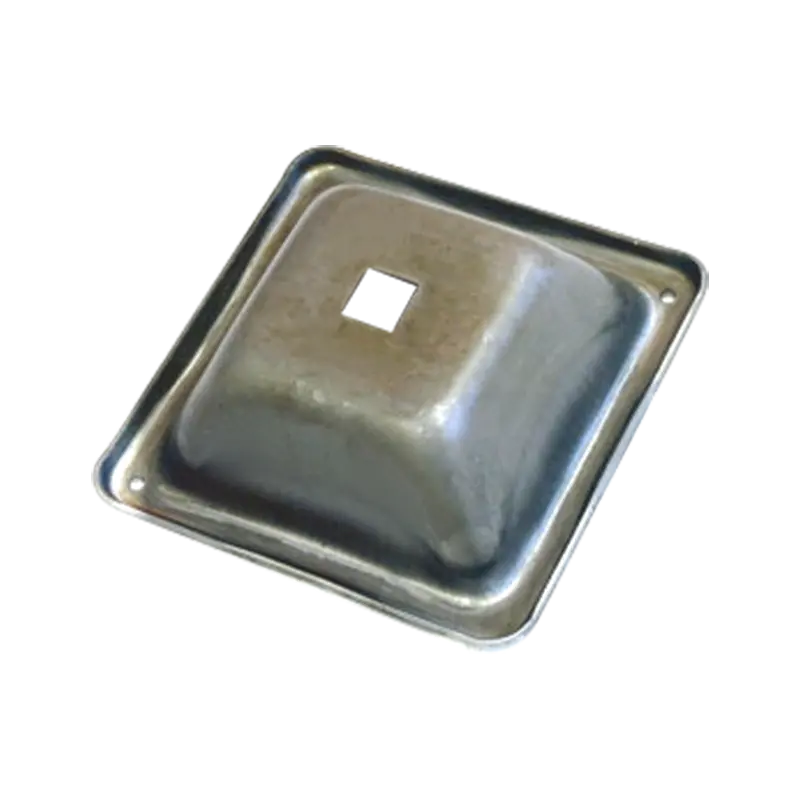
But for many procurement managers and engineers, several questions remain: How does it work? Why choose stainless steel? And how can a factory turn a simple drawing into a complex, finished part? This guide explores everything you need to know about the world of As Per Drawing Or Samples Custom Metal Deep Drawing Part Deep Drawing In Stainless Steel.
What Exactly is Deep Drawing and How Does it Benefit You?
Deep drawing is a sheet metal forming process in which a sheet metal blank is radially drawn into a forming die by the mechanical action of a punch. It is considered "deep" drawing when the depth of the drawn part exceeds its diameter.
The primary benefit of this process is its ability to create seamless, hollow, three-dimensional shapes. Unlike welding multiple pieces of metal together—which creates weak points and seams—deep drawing produces a single, continuous piece of metal. This results in superior structural integrity and a much cleaner aesthetic.
The Strength of Seamless Construction
When a part is deep drawn, the grain structure of the metal is actually manipulated and stretched, often making the final product stronger than the original flat sheet. For industries like aerospace or medical device manufacturing, where a single leak or crack could be catastrophic, the seamless nature of a custom deep drawn part is not just a preference; it is a requirement.
Why Stainless Steel is the Gold Standard for Custom Parts
While deep drawing can be performed on various materials—including carbon steel, aluminum, iron, galvanized steel, brass, and copper—stainless steel remains the most popular choice for high-end applications.
Corrosion Resistance and Longevity
Stainless steel contains chromium, which creates a passive layer of chromium oxide on the surface. This layer protects the metal from rust and corrosion, even in harsh environments. Whether the part is destined for a marine environment or a chemical processing plant, stainless steel ensures the component lasts for decades.
Heat Resistance
In automotive and industrial machinery, parts are often subjected to extreme temperatures. Stainless steel maintains its mechanical properties at much higher temperatures than aluminum or standard carbon steel, preventing deformation and failure under stress.
From Concept to Reality: Customization Based on Drawings and Samples
One of the most common questions we hear is: "Can you make this exact shape?" The answer lies in the flexibility of custom manufacturing. By working As Per Drawing Or Samples Custom Metal Deep Drawing Part Deep Drawn In Stainless Steel, manufacturers can ensure that every millimeter of the component matches the client’s specific needs.
Engineering Based on Your Blueprints
If you have a professional CAD drawing, the manufacturing team uses those exact coordinates to program the tooling. This ensures a level of precision that manual fabrication could never achieve. Tolerances can be kept incredibly tight, ensuring that the part fits perfectly into a larger assembly.
Reverse Engineering from Physical Samples
Sometimes, a company might have an old part that needs replacing but no longer has the original blueprints. In these cases, the manufacturer can take a physical sample, use 3D scanning technology to map its dimensions, and recreate the part perfectly. This "sample-to-part" workflow is essential for maintenance, repair, and the restoration of older machinery.
The Importance of In-House Mold Design and Production
The heart of the deep drawing process is the mold (or die). A deep drawn part is only as good as the mold used to create it. This is why top-tier manufacturers insist on in-house mold design, production, and assembly.
Faster Turnaround Times
When a factory has to outsource its mold making, it adds weeks to the production schedule. If there is a mistake in the mold, it has to be sent back, causing further delays. By designing and producing molds in-house, engineers can make real-time adjustments, significantly shortening the lead time from the prototype stage to mass production.
Cost Efficiency
While the initial cost of a custom mold can be significant, in-house production reduces the middleman markup. Furthermore, because the designers are in constant communication with the production team, the molds are built for "manufacturability," meaning they are optimized to reduce material waste and speed up the stamping cycle.
A World of Material Choices Beyond Stainless Steel
While we have highlighted the benefits of stainless steel, the versatility of custom metal deep drawing allows for a wide range of materials depending on the application’s budget and physical requirements.
-
Aluminum: Lightweight and naturally resistant to corrosion. Excellent for the electronics and aerospace sectors.
-
Carbon Steel & Iron: Highly durable and cost-effective. These are the workhorses of the construction and heavy machinery industries.
-
Copper & Brass: Known for excellent electrical and thermal conductivity. These are frequently used in electrical components and decorative architectural hardware.
-
Galvanized Steel: Provides a middle ground between carbon steel and stainless steel, offering good rust protection via a zinc coating at a lower price point.
Adding the Final Touch: Surface Finishing Options
A deep drawn part is rarely "finished" the moment it pops out of the die. To meet functional or aesthetic requirements, various surface treatments are applied.
Protective Coatings
-
Powder Coating: Provides a thick, durable, and colorful layer that protects against scratches and UV damage.
-
Zinc/Nickel/Chrome Plating: Adds a layer of metal to the surface to improve corrosion resistance or to provide a shiny, decorative "mirror" finish.
-
Hot Dip Galvanized: Involves submerging the part in molten zinc, creating a thick, rugged coating ideal for outdoor infrastructure.
Functional Treatments
-
Anodizing: Specifically for aluminum, this process hardens the surface and allows for vibrant color dyeing.
-
Passivation: Essential for stainless steel, this chemical process removes free iron from the surface to maximize corrosion resistance.
-
KTL (E-Coating): An electrophoretic painting process that provides uniform coverage even in deep recesses and complex geometries, making it a favorite for automotive under-body parts.
-
Polishing & Brushing: These mechanical finishes determine the texture of the metal, ranging from a dull, "brushed" look to a high-gloss finish.
Ensuring Every Part Meets the Design
When ordering custom metal parts, consistency is the biggest concern. How do you know the 10,000th part will be just as good as the first one?
Modern deep drawing facilities utilize rigorous Quality Assurance (QA) protocols. This includes:
-
Initial Material Inspection: Testing the raw metal sheets for thickness and chemical composition.
-
In-Process Monitoring: Checking parts at various stages of the draw to ensure no thinning or "earing" (unwanted wavy edges) is occurring.
-
Final Dimensional Inspection: Using Coordinate Measuring Machines (CMM) to verify that every dimension matches the original drawing.
Finding Your Manufacturing Partner
Choosing to invest in As Per Drawing Or Samples Custom Metal Deep Drawing Part Deep Drawn In Stainless Steel is a commitment to quality and precision. By utilizing a factory that handles everything from mold design to final surface finishing under one roof, you eliminate the risks of miscommunication and ensure a streamlined supply chain.
Whether you are developing a new product from scratch or looking for a more reliable way to produce an existing component, deep drawing offers a blend of strength, beauty, and cost-effectiveness that other methods simply cannot match.
Is Your Livestock Hydration System Efficient? The Ultimate Guide to Thickened 304 Stainless Steel Automatic Drinking Bowls
Why is Deep Drawing the Go-To Solution for Complex Metal Covers?
related products
Send An Inquiry
Don't hesitate to contact when you need us!
Whether you want to become our partner or need our professional guidance or support in product selections and problem solutions, our experts are always ready to help within 12 hours globally
contact Us
Phone:+86 139-5824-9488
FAX :+86 574-86150176
E-mail: [email protected] [email protected]
Address: Unit 2, Building 19, Zhichuangzhizao Park, Chengdong Industrial Zone, Xiangshan, Ningbo,315705, Zhejiang, China
Product Category
Mobile