中文简体
中文简体 Español
Industry News
Jan 15,2026
Why is Deep Drawing the Go-To Solution for Complex Metal Covers?
Content
- 1 What Exactly is Deep Drawing and Why Does It Matter?
- 2 Material Versatility: From Carbon Steel to Exotic Alloys
- 3 Precision Engineering: The Role of In-House Mold Design
- 4 Surface Finishes: Protection Meets Aesthetics
- 5 Customization: Dimensions as Per Your Design
- 6 Frequently Asked Questions About Deep Drawn Parts
- 7 Choosing the Right Partner for Your Project
Deep drawing is a cornerstone of modern manufacturing, yet it remains a process filled with technical nuance. From the kitchen sink to the protective housing of an industrial engine, deep-drawn parts are everywhere. But for many engineers and procurement specialists, choosing the right material, finish, and manufacturer can be a daunting task.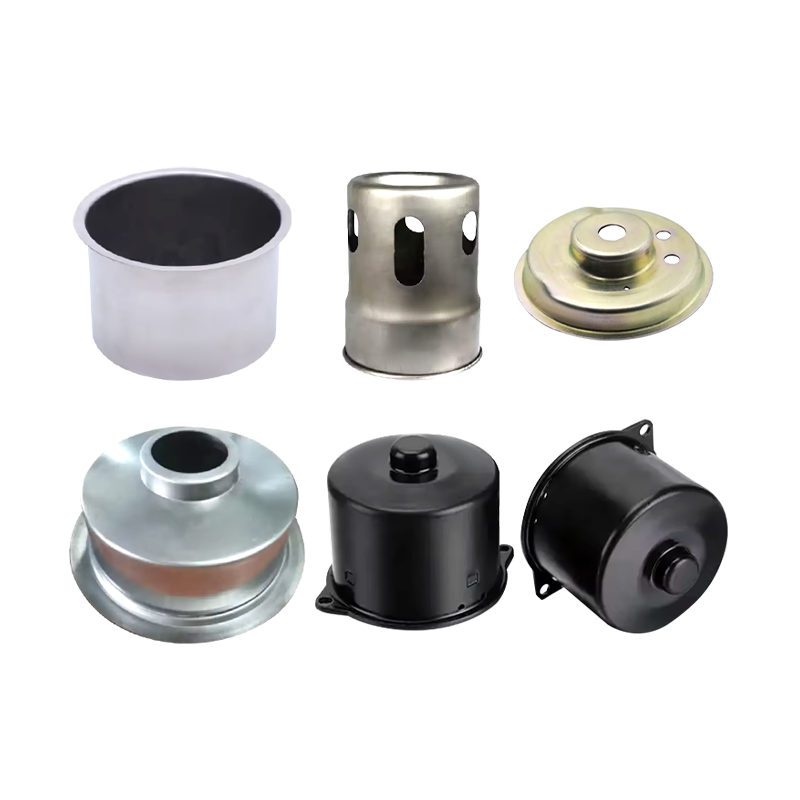
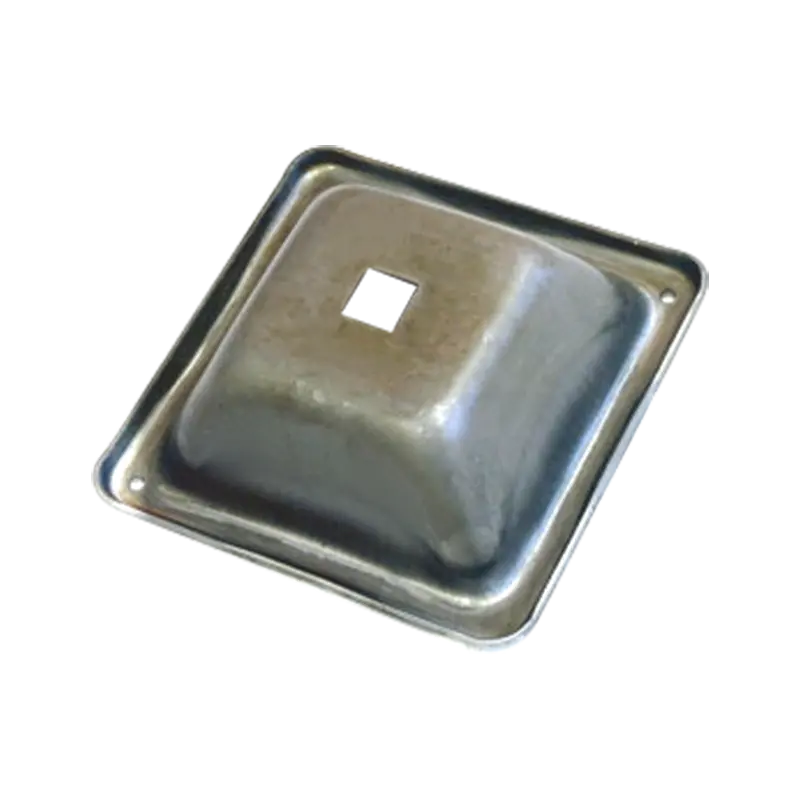
This guide explores the essentials of high-quality Metal Fabrication Sheet Metal Deep Drawn Stainless Steel Deep Drawing Steel Cover Part production and answers the most pressing questions in the industry today.
What Exactly is Deep Drawing and Why Does It Matter?
At its core, deep drawing is a sheet metal forming process in which a sheet metal blank is radially drawn into a forming die by the mechanical action of a punch. It is considered "deep" drawing when the depth of the drawn part exceeds its diameter.
This process is transformative because it allows for the creation of seamless, complex shapes that would be impossible—or incredibly expensive—to create through welding or casting. When you need a protective cover that is airtight, watertight, and structurally sound, deep drawing is often the only logical choice.
The Strength of a Seamless Design
One of the primary reasons industries favor deep drawing for cover parts is the elimination of seams. In traditional fabrication, a box or cover might be made by folding metal and welding the corners. Every weld is a potential point of failure, a site for corrosion, or a leak path. Deep drawing creates a single, continuous piece of metal, ensuring maximum structural integrity and a clean, aesthetic finish.
Material Versatility: From Carbon Steel to Exotic Alloys
One of the most common questions from buyers is:"Can this process work with my specific material?"The answer is almost always yes. The versatility of modern deep drawing presses allows manufacturers to work with a vast array of metals, each bringing unique properties to the final part.
The Resilience of Stainless Steel
Stainless steel is perhaps the most popular choice for deep-drawn covers. Its resistance to corrosion and high-temperature tolerance make it ideal for medical devices, food processing equipment, and automotive components. Because stainless steel work-hardens during the drawing process, the final part often ends up stronger than the initial blank.
The Efficiency of Carbon Steel and Iron
For industrial applications where cost-efficiency is paramount, carbon steel and iron are the workhorses. These materials are highly formable and, when paired with the right surface treatment, offer incredible longevity in harsh environments.
Lightweight Solutions: Aluminum and Beyond
In the aerospace and electronics sectors, weight is everything. Aluminum provides a high strength-to-weight ratio and excellent thermal conductivity. Similarly, materials like brass and copper are frequently used for their electrical conductivity and aesthetic appeal in decorative or electronic housing applications.
Specialty Materials
Beyond the basics, galvanized steel offers built-in rust protection, making it a favorite for outdoor enclosures. No matter the environment—be it the salty air of a coastal town or the sterile halls of a hospital—there is a material substrate that fits the bill.
Precision Engineering: The Role of In-House Mold Design
A deep-drawn part is only as good as the mold it was formed in. This is where the difference between a standard fabricator and a precision partner becomes clear.
Why In-House Tooling is a Game Changer
When a manufacturer handles the design, production, and assembly of molds in-house, they retain total control over the quality loop.
- Rapid Prototyping: Changes can be made on the fly without waiting for a third-party tool shop.
- Tight Tolerances: Engineers can fine-tune the mold to account for material "springback," ensuring the final dimensions match the design exactly.
- Cost Savings: Eliminating the middleman in tool production reduces the overall project cost for the client.
The assembly of these molds requires extreme precision. Every component must align perfectly to ensure that the metal flows smoothly into the die without tearing or thinning excessively at the corners.
Surface Finishes: Protection Meets Aesthetics
A Metal Fabrication Sheet Metal Deep Drawn Stainless Steel Deep Drawing Steel Cover Part is rarely finished the moment it leaves the press. The surface treatment is what prepares the part for its specific life cycle.
Corrosion Resistance and Plating
For parts exposed to moisture or chemicals, plating is essential.
- Zinc Plating: A cost-effective way to prevent rust.
- Nickel and Chrome Plating: Offers a high-shine finish along with excellent wear resistance.
- Hot Dip Galvanizing: The gold standard for outdoor durability, providing a thick layer of protection.
Decorative and Functional Coatings
- Powder Coating: Available in almost any color, this provides a durable, "plastic-like" finish that resists chipping and scratching.
- Anodizing: Specifically for aluminum, this process thickens the natural oxide layer, making it harder and more resistant to corrosion.
- Brushed and Polished: For high-end consumer goods or medical tools, a mechanical polish or brushed texture provides a premium look and feel.
Chemical Treatments
Processes like passivation (for stainless steel) and KTL (Cathodic Epoxy Coating) ensure that the metal is chemically stable. KTL, in particular, is highly valued in the automotive industry for its ability to coat complex geometries and hard-to-reach recesses evenly.
Customization: Dimensions as Per Your Design
One of the biggest misconceptions about deep drawing is that it is only for "standard" sizes. In reality, the process is incredibly flexible. Whether you need a small protective cap for an electronic sensor or a large protective housing for a heavy-duty pump, the dimensions are dictated entirely by the client's design.
Modern CAD/CAM software allows engineers to simulate the drawing process before a single piece of metal is cut. This simulation predicts how the material will behave, allowing for adjustments in the design phase to ensure that the final product meets the required specifications without unnecessary waste.
Frequently Asked Questions About Deep Drawn Parts
1. Is deep drawing more expensive than stamping?
While the initial tooling (mold) cost for deep drawing can be higher than simple stamping, it is often more cost-effective for complex parts. It reduces the need for secondary operations like welding, grinding, and assembly, which significantly lowers the per-unit cost in medium to high-volume production.
2. How do I choose the right finish for my part?
The choice depends on the environment. If the part is internal and won't be seen, a simple passivated or zinc-plated finish might suffice. If it’s a consumer-facing component, powder coating or chrome plating is usually preferred for its visual appeal.
3. Can you deep draw thick materials?
Yes. While many people associate deep drawing with thin foils or cans, heavy-duty presses can handle significant gauges of steel and iron to create robust industrial covers.
Choosing the Right Partner for Your Project
When searching for a manufacturer, it is vital to look for a "one-stop shop." A partner who can take a project from a raw design concept, handle the in-house mold creation, execute the deep drawing, and apply the final surface finish provides a level of consistency that is hard to match.
The reliability of a Metal Fabrication Sheet Metal Deep Drawn Stainless Steel Deep Drawing Steel Cover Part depends on every step of this chain. By integrating design, material science, and advanced finishing techniques, manufacturers can deliver parts that are not only functional but also durable and cost-effective.
Summary of Capabilities
| Feature | Options Available |
| Materials | Stainless Steel, Carbon Steel, Aluminum, Brass, Copper, Galvanized Steel |
| Tooling | Full In-house Design, Production, and Assembly |
| Finishing | Powder Coating, Plating (Zinc, Chrome, Nickel), Anodizing, KTL, Polishing |
| Applications | Automotive, Medical, Industrial Housing, Electronics, Consumer Goods |
Whether you are in the early stages of a product launch or looking to optimize an existing supply chain, understanding the capabilities of deep drawing is the first step toward a superior final product. The combination of seamless strength, material variety, and precision finishing makes it the ultimate choice for high-quality metal covers.
Why is Custom Deep Drawing the Secret to High-Performance Metal Components?
Everything You Need to Know About High-Precision Deep Drawing: Your Ultimate Guide
related products
Send An Inquiry
Don't hesitate to contact when you need us!
Whether you want to become our partner or need our professional guidance or support in product selections and problem solutions, our experts are always ready to help within 12 hours globally
contact Us
Phone:+86 139-5824-9488
FAX :+86 574-86150176
E-mail: [email protected] [email protected]
Address: Unit 2, Building 19, Zhichuangzhizao Park, Chengdong Industrial Zone, Xiangshan, Ningbo,315705, Zhejiang, China
Product Category
Mobile