中文简体
中文简体 Español
Home / Resources / Industry News / Electrical Busbar System Basics: Components, Materials, and Custom Fabrication
Industry News
Oct 15,2026
Electrical Busbar System Basics: Components, Materials, and Custom Fabrication
Content
- 1 What an Electrical Busbar System Does
- 2 Copper or Aluminium: the First Specification Decision
- 3 Busbar Arrangements and Where They Fit
- 4 From Bar Stock to Finished Hardware
- 5 Supports, Brackets and Insulation
- 6 What to Put on the Drawing Before Requesting a Quote
- 7 How In House Tooling Changes Lead Time and Consistency
When a panel builder replaces a cable harness with a single copper bar, the conversation usually starts with ampacity. In service, that is rarely what fails. A bolted joint torqued once and never rechecked, a bracket that cracks after a few thousand thermal cycles, a punched hole sitting half a millimetre off centre so the bar never sits flat on its insulator. Those are the reasons a busbar assembly gets pulled out of a live panel.
An electrical busbar system is a modular way of wiring devices by mounting them on rigid conductors instead of running a separate cable to every terminal. The idea is simple. The engineering that keeps it reliable for fifteen years is not, and much of it sits in the small stamped, bent and plated parts around the conductor.
What an Electrical Busbar System Does
A busbar is a rigid conductor, usually a flat bar of copper or aluminium, that collects power from incoming feeders and distributes it to outgoing feeders. Breakers, fuse holders and meters connect to it, so a new tap can be added without rerouting a cable bundle. Compared with cable, a bar offers three practical advantages.
- Lower voltage drop for the same cross sectional area, because the conductor runs straight and short instead of looping through a harness.
- Better heat removal, since flat faces radiate and convect far more effectively than a bundled cable inside a duct.
- Faster fault finding and modification, because every connection point is visible from the front of the panel.
Solid rectangular bar is the default for distribution panels. Hollow and flexible laminated bars are used where the conductor has to follow a curve between two fixed terminals, for example between a capacitor bank and a converter stack.
Copper or Aluminium: the First Specification Decision
Copper is the default because it conducts better and holds a bolted joint more predictably. Aluminium is roughly 61 percent as conductive, so it needs about 1.5 to 1.6 times the cross section for the same current. It returns weight instead, since aluminium is about one third the density of copper, which matters on long runs and in equipment that has to be lifted. The hidden cost is the joint. Aluminium oxidises quickly after cleaning, so contact faces need abrasion and immediate protection, and aluminium to copper connections need a bimetallic transition or a plated interface to avoid galvanic corrosion.
| Property | Copper | Aluminium |
|---|---|---|
| Relative conductivity | About 100 percent IACS | About 61 percent IACS |
| Density | About 8.9 g per cubic cm | About 2.7 g per cubic cm |
| Cross section for the same current | Baseline | About 1.5 to 1.6 times larger |
| Joint behaviour | Stable when torqued correctly | Relaxes more, needs re torque and oxide control |
| Typical use | Panel distribution, switchgear, tight spaces | Long runs, weight sensitive equipment, large frames |
Busbar Arrangements and Where They Fit
The bar is only half the design. The arrangement around it decides how much of the installation you can maintain without shutting everything down.
| Arrangement | How it works | Typical use | Trade off |
|---|---|---|---|
| Single busbar | One set of bars feeds every bay | Small industrial panels and distribution boards | Lowest cost, but one fault stops the whole board |
| Main and transfer | A second bar takes over while the main bar is isolated | Substations that cannot accept a long outage | Moderate cost, needs a strict switching procedure |
| Double bus double breaker | Each bay has two breakers, one per bar | Critical supply points | High cost and space, maximum flexibility |
| One and a half breaker | Three breakers serve two bays | Large transmission and high voltage stations | Good redundancy per breaker, complex protection |
| Ring main | Bars form a closed loop, each bay fed from two directions | Compact high voltage layouts | Compact and reliable, fault current is harder to manage |
From Bar Stock to Finished Hardware
Tolerances that look like shop floor detail decide how the conductor behaves once installed.
- Hole position. A joint hole 0.5 mm off centre reduces contact area and pulls the bar out of alignment. Around plus or minus 0.2 mm is a normal shop tolerance for punched joint holes.
- Burr height. Burrs raise local resistance, damage insulation and stop faces sitting flat. A 0.1 mm maximum after deburring is a reasonable line to put on the drawing.
- Bend radius. Keep the inside radius at least equal to the material thickness, and specify the bend angle with a tolerance, because springback is never zero.
- Plating. Tin at 5 to 10 microns is the workhorse for bolted joints. Silver is used where contact resistance must be very low, nickel where abrasion or corrosion matters more than conductivity.
- Flatness. A bar that twists loads its insulator on one edge, so flatness and twist limits should be given per unit length rather than as an overall dimension.
Parts that combine punching, bending and welding are usually cheaper from one supplier, because hole patterns and bend lines have to agree with each other. Material choice drives much of that cost, and the link between grade, formability and finished tolerance is worth settling before a drawing is frozen: how to choose suitable materials for metal stamping parts.
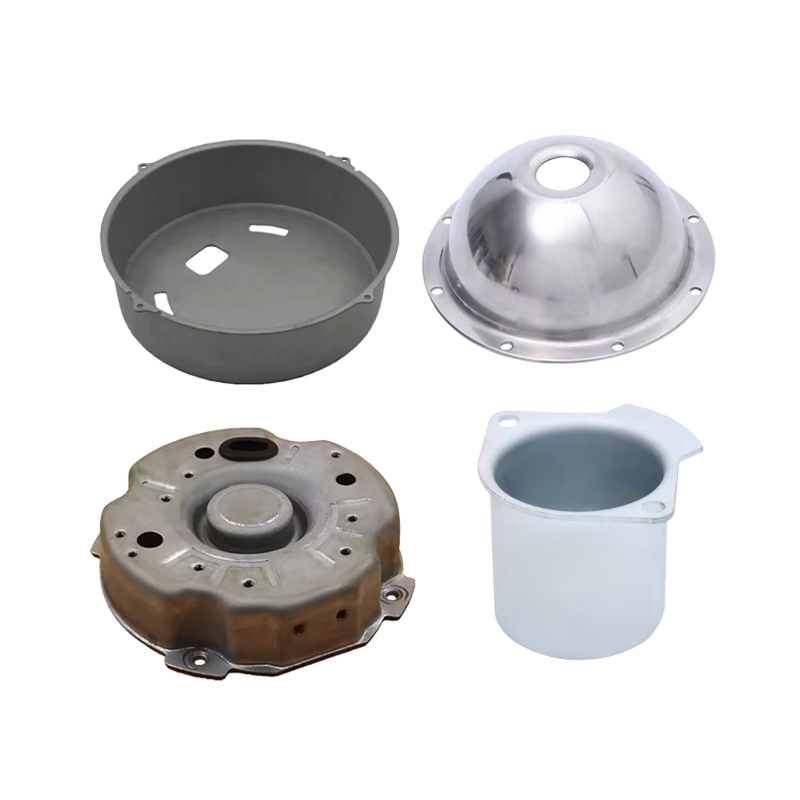 Custom Metal Stamping Bending and Deep Drawing PartsCustom OEM sheet metal stamping, bending, and deep drawing service for precision parts, with multiple materials and surface treatment options.View Product →
Supports, Brackets and Insulation
The conductor is rarely the weak point. Standoff insulators, clamps, phase barriers and mounting brackets carry the weight of the bar and resist short circuit forces, which can reach tens of kilonewtons between adjacent bars during a fault. Three points belong in the specification.
- Clearance and creepage follow the standard the panel is built to and change with pollution degree, altitude and voltage class. Fix the standard first, then the bracket geometry.
- Slotted holes give adjustment on site, round punched holes give repeatability in production. Mixing the two along one long row of bars usually produces alignment problems at the far end.
- Bracket material matters near the conductor. Galvanised or powder coated steel is the common choice for frames, while insulated standoffs keep live parts away from anything that could carry fault current.
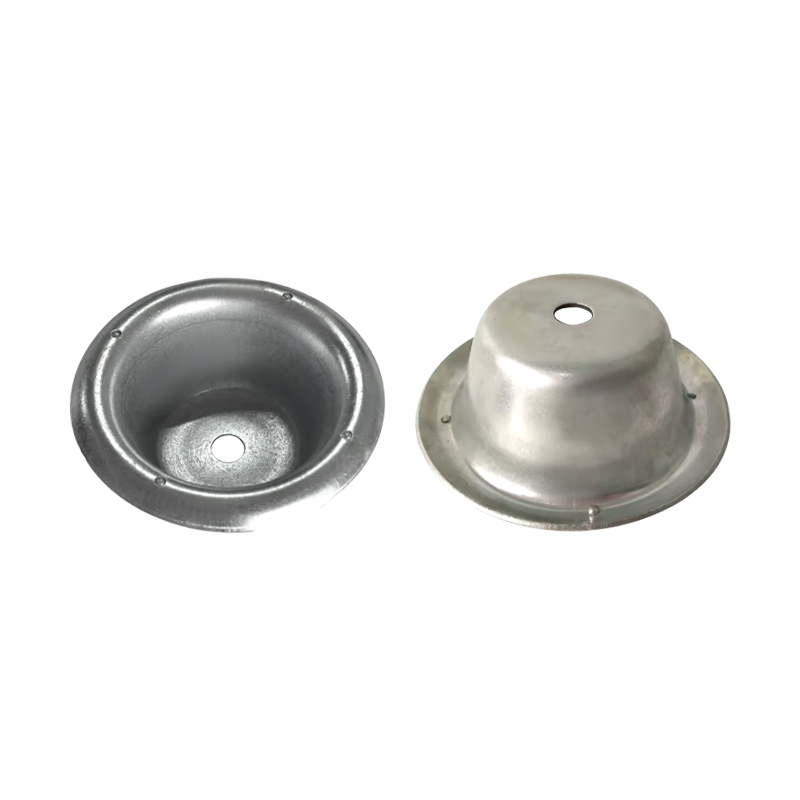 Precision Sheet Metal Pipe Connection Bracket Stamping ServiceCustom OEM stamped pipe connection bracket for automotive, industrial, pipeline, and aerospace uses, with varied materials, finishes, and ISO9001:2015 quality management.View Product →
What to Put on the Drawing Before Requesting a Quote
Most of the price difference between two quotations for the same bracket comes from what was left unsaid on the drawing. A complete enquiry package for busbar hardware usually covers the following.
- Material grade, temper and thickness, with a mill certificate if the conductor grade is critical.
- Conductivity requirement, or a note that commercial grade is acceptable.
- Plating type, thickness range and a salt spray target for exposed parts.
- Hole diameters, position tolerance and a maximum burr height.
- Flatness and twist limits expressed per unit length.
- Deburring, edge treatment, marking and traceability requirements.
- First article inspection and dimensional report expectations, plus packaging that will not scratch plated surfaces.
Each item becomes a process decision: blanking or progressive die stamping, hand deburring or vibratory finishing, a welding fixture or free hand assembly. Decisions made after the order is placed move the schedule.
How In House Tooling Changes Lead Time and Consistency
As with most custom metal work, tooling is the long pole. A supplier with its own die shop can review a drawing, flag a bend that will not form cleanly, and correct the tool before the first sample is pressed.
Ningbo Dasheng Metal Products designs and builds its own moulds, and runs presses from 4T to 1000T, hydraulic presses to 1000T, bending, TIG and MIG welding, punching, threading and vibratory deburring in one plant. Stamping covers sheets up to 1300 mm by 1000 mm and material thickness to 20 mm, the factory holds ISO9001:2015 certification, and annual capacity is around 5 million pieces.
Forming, welding and coating interact on parts such as powder coated support frames and welded enclosures, which are normally supplied as one finished assembly rather than a set of loose pieces: sheet metal bending and welding services.
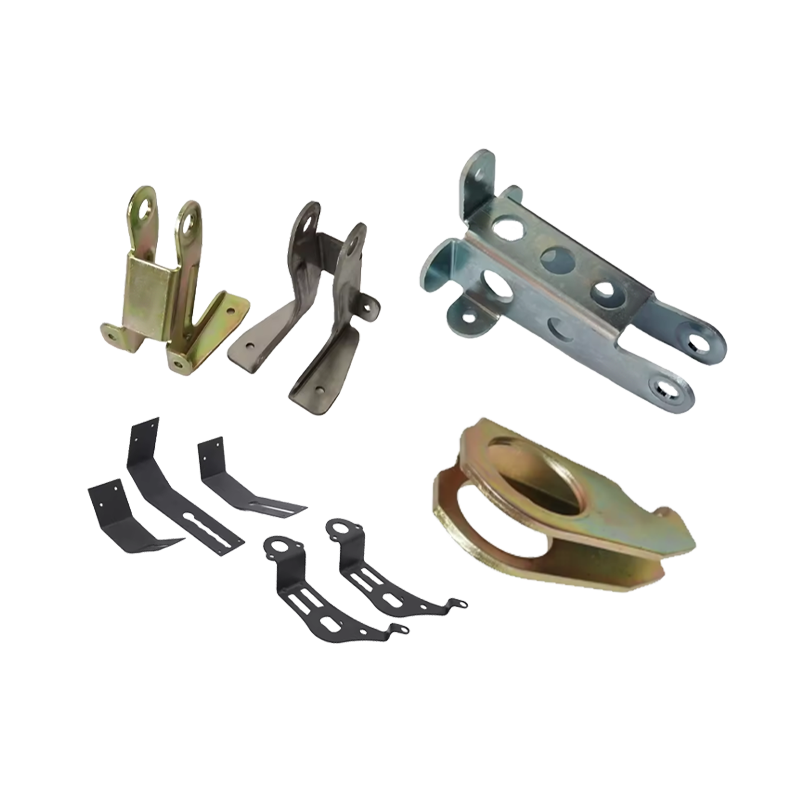 Powder Coated Sheet Metal Bending Welding Frame PartsCustom OEM frames formed by bending and welding, then powder coated for corrosion and weather resistance in construction, industrial, and transportation applications.View Product →
For a busbar system, the useful test is not how the bar looks on a bench. It is whether the joint still holds torque after a year of load cycling, whether the bracket has kept the conductor aligned through every fault and repair, and whether the next tap can be added in twenty minutes. Those outcomes are set by material grade, plating thickness, hole position and tooling quality, long before the panel is energised.
If you are sourcing stamped, bent or welded hardware for a distribution or busbar assembly, send the drawing, the material requirement and the plating specification together. A supplier that makes its own tooling can normally say within a day whether the part will form cleanly, and what it will cost at the volumes you actually plan to buy.
related products
Send An Inquiry
Don't hesitate to contact when you need us!
Whether you want to become our partner or need our professional guidance or support in product selections and problem solutions, our experts are always ready to help within 12 hours globally
contact Us
Phone: +86 18157484296
FAX: +86 574-86150176
E-mail: [email protected]
Address: Unit 2, Building 19, Zhichuangzhizao Park, Chengdong Industrial Zone, Xiangshan, Ningbo,315705, Zhejiang, China
Product Category
Mobile