中文简体
中文简体 Español
Home / Resources / Industry News / Crimp Terminals: Types, Crimping Quality, and Stamped Terminal Manufacturing
Industry News
Oct 08,2026
Crimp Terminals: Types, Crimping Quality, and Stamped Terminal Manufacturing
Content
- 1 What a Crimp Terminal Actually Does
- 2 Main Crimp Terminal Types and Where Each One Fits
- 3 Selection Factors That Decide Whether the Joint Survives
- 4 Good Crimp Versus Bad Crimp: What to Inspect
- 5 How Crimp Terminals Are Made
- 6 Closed Barrel Lugs and Other Drawn Parts
- 7 Specifying Custom Terminals and Stamped Contacts
- 8 Common Questions About Crimp Terminals
- 9 Final Thoughts
A harness shop recently scrapped two thousand crimped connectors that had passed visual inspection but failed a sixty second pull test at 80 N. The part number was correct, the wire was the specified 1.5 mm2 conductor, and the same bench press had run that job for three years. The difference came from a 0.06 mm shift in the wire barrel diameter of one production lot, which was enough to push the compression of the strands outside the range where copper fuses into a solid joint.
Crimp quality is decided by three things that must match: the terminal barrel, the wire, and the tooling. When they match, a properly crimped terminal holds more load than the wire itself and stays stable for decades. When they do not, no amount of operator care will compensate. The sections below explain how to make that match deliberately rather than by luck.
What a Crimp Terminal Actually Does
A crimp terminal is a stamped metal contact with two working areas. The wire barrel is the tube that receives the stripped conductor. The insulation support, when it exists, is a second pair of tabs that grips the insulation rather than the copper.
A correct crimp does not simply clamp the wire. The die compresses the barrel by roughly 20 to 30 percent of its original height, forcing individual strands and the barrel wall to flow into one another and form a cold weld. The result is a gas tight joint with no oxygen path to the copper, which is why a good crimp resists corrosion even in damp engine bays and outdoor control cabinets.
Standards such as UL 486A and IEC 60352-2 describe the joint by performance rather than by geometry. They do not care how the terminal was shaped, only that the finished connection survives mechanical pull, voltage drop, heat cycling and corrosion testing. That is exactly why barrel dimensions, material temper and plating thickness matter more than the appearance of the finished terminal.
Main Crimp Terminal Types and Where Each One Fits
Most projects need only two or three of the families below. The third column lists the points that cause the majority of production returns and field failures.
| Terminal type | Typical connection | What to check before buying |
|---|---|---|
| Ring terminal | Studs, earth bonding, battery and ground cables | Stud diameter, tongue thickness, barrel length against the lug being replaced |
| Fork or spade terminal | Screw terminals in places where full removal is difficult | Fork gap against screw size, and whether the fork can slip off under vibration |
| Pin terminal | Ferrules and pluggable terminal blocks | Pin diameter and length against the block entry, plus insertion force |
| Butt splice | Joining two wires in line inside a harness | Barrel length on both sides, insulation colour code against the wire range |
| Quick disconnect | Blade contacts in low current and serviceable circuits | Blade width and thickness, retention force, and vibration level at the mounting point |
| Flag terminal | Right angle connections in tight housings | Bend clearance after crimping and available space to the housing wall |
| Tubular lug and ferrule | Battery cables, high current and fine strand cable | Wall thickness, drawn or rolled barrel, and plating suited to the environment |
The practical rule is simple. Choose the connection style first, based on how often the joint must be opened, then choose the barrel style, based on the wire class and the current. Buying by appearance or by price alone usually moves the problem to the crimping station.
Selection Factors That Decide Whether the Joint Survives
Wire compatibility
Conductor size alone is not enough. Two 1.5 mm2 wires can be built from seven strands of 0.52 mm or from thirty strands of 0.25 mm, and the finer class needs a different barrel and die. A usable datasheet states a wire range in mm2 or AWG together with an insulation diameter range. If the stripped conductor sits loose in the barrel before crimping, or cannot be inserted without spreading the strands, the barrel is wrong for that wire.
Insulated or non-insulated
Insulated terminals trade current capacity and temperature rating for speed and touch safety. Vinyl sleeves are usually rated to about 75 degrees Celsius, nylon to 105 degrees Celsius, and heat shrink versions higher still. Near exhaust hardware, brake lines or engine mounts, the sleeve material often degrades before the metal joint does, so the sleeve rating should be read as a real process limit rather than a marketing number.
Environment and mechanical load
Vibration, salt spray and thermal cycling change the answer. A ring terminal on a properly sized stud with a locking washer survives vibration that would fatigue a spade terminal. A quick disconnect exists precisely because it can be pulled apart, so it does not belong anywhere the connection must never move.
Material and plating
Electrolytic copper is the default for conductivity, brass is stiffer and cheaper, and phosphor bronze appears where spring force must be maintained. Tin plating covers most corrosion and solderability needs, while silver is reserved for very low contact resistance or elevated temperature. These trade-offs are technical rather than commercial, and the reasoning behind them is set out in this guide to how to choose suitable materials for metal stamping parts.
Good Crimp Versus Bad Crimp: What to Inspect
The most reliable check on the shop floor is still a crimp height measurement with a micrometer across the wire barrel, compared against the value on the tooling datasheet. Visual checks come second, but they catch the mistakes that measurement alone can miss.
- Bell mouth: the barrel end should flare slightly, showing that the die compressed rather than sheared the barrel.
- Cut strands: any strand sliced by a sharp die edge lowers tensile strength and can act as a crack starter.
- Insulation support: insulation should sit just outside the barrel and inside the support tabs without being pinched or cut.
- Conductor tail: roughly 0.5 to 1 mm of conductor should extend past the barrel end on small terminals.
- Pull test: the value must meet the terminal datasheet. A failed crimp usually shows a partial strand break rather than a clean pull out.
- Crimp height inside tolerance: typically plus or minus 0.05 mm for small barrels, tighter than most general sheet metal work.
When a line starts failing pull tests, the cause is nearly always one of four things: the wrong die nest for the barrel, a stripping length that leaves copper in the insulation crimp, mixed terminal lots from different production runs, or tooling that has drifted past its maintenance interval.
How Crimp Terminals Are Made
Terminals are produced by progressive die stamping, not by casting or machining. A coil of copper or brass strip, usually 0.3 to 1.0 mm thick and often pre-plated, runs through a die that progressively blanks, pierces, forms the barrel, forms the tongue and cuts the part free. The barrel is rolled into a cylinder around a mandrel, so its roundness, inner diameter and wall thickness depend directly on die condition and strip consistency.
That is where tolerance stack up becomes expensive. Strip camber, thickness variation, die wear and plating thickness all shift the final barrel diameter. A supplier who inspects only the outer outline can still ship terminals that fail at the crimping station, because the critical dimensions sit inside the barrel and around the tongue rather than on the outside edge. Work of this kind needs in process gauging, not only final inspection.
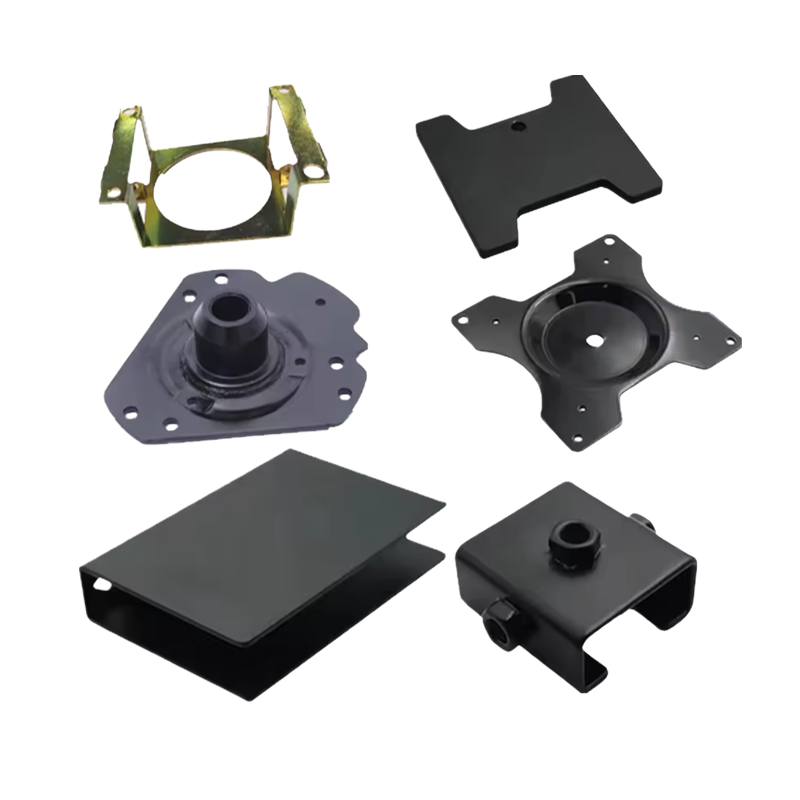 High Precision Custom Metal Stamping Components for OEM ApplicationsCustom metal stamping for close-tolerance components, including terminal-type parts, with in-process gauging to control critical internal dimensions.View Product →
Forming steps deserve the same attention. Flag terminals that are bent ninety degrees after crimping, lugs with formed tabs, and spring contacts that must hold force for years all depend on bend radii and springback control, because a formed feature that relaxes by a few tenths of a millimetre changes the mating force of the finished connection.
Closed Barrel Lugs and Other Drawn Parts
Not every terminal starts as flat strip. Closed barrel lugs, tubular sleeves and battery cable ends often start as a drawn shell, where a flat blank is formed into a cup and then reduced in several passes until the wall reaches the required thickness. Drawing gives a seamless barrel with no seam to open under high current, but it also means the wall thickness varies slightly between the base and the rim, and that variation directly affects how the barrel deforms during crimping.
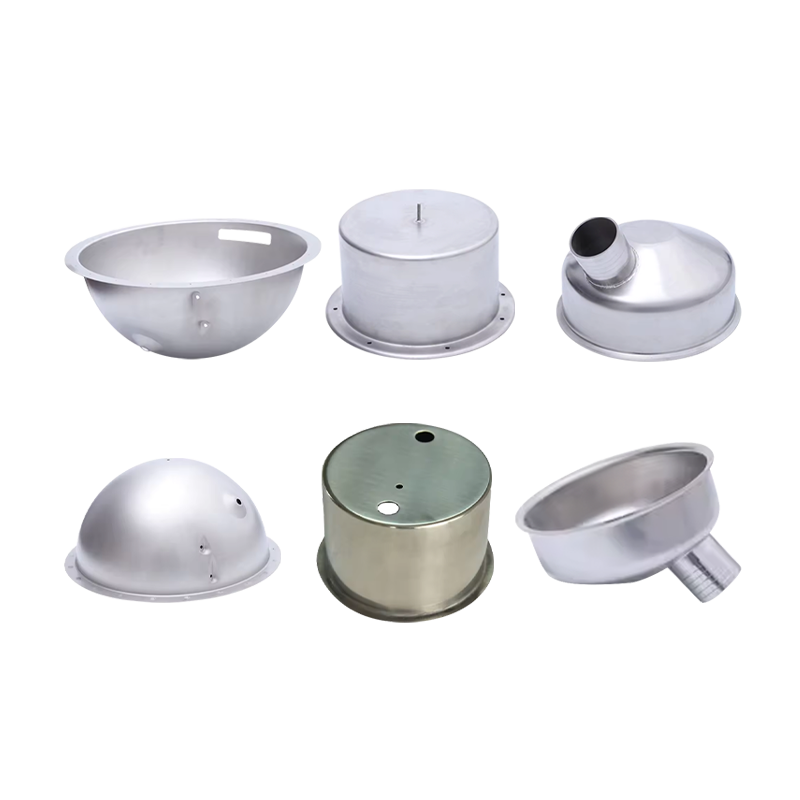 Custom Deep Drawn Stainless Steel Sheet Metal PartsDeep drawn and stamped components for seamless barrels, where wall thickness and concentricity affect crimping and final connection reliability.View Product →
For a drawn barrel, the drawing specification should call out the wall thickness at the crimp zone rather than the average, plus concentricity against the bore. Two mills can both quote 1.0 mm wall and still deliver parts that crimp differently, because one holds 1.0 mm at the base and 0.9 mm at the rim while the other does the opposite.
Specifying Custom Terminals and Stamped Contacts
Custom work becomes necessary when the standard catalogue stops matching reality: an unusual stud pattern, a barrel sized for a wire class nobody stocks in a stock terminal, a plating needed for a specific chemical exposure, or a formed tab that must fit an existing housing. A complete enquiry should contain the following.
- A drawing with all critical dimensions, marking the crimp zone and the mating features separately.
- The wire construction, including strand count and insulation diameter, not only the cross section.
- Material and temper of the strip, plus plating type and thickness in micrometres.
- Annual volume, lot size and whether the part will run in one campaign or continuously.
- Test requirements such as pull value, voltage drop, salt spray hours or heat cycling.
- Packaging format, especially if the parts feed an automatic crimping machine.
Tooling is the part of the quote that deserves the closest reading. A supplier that runs its own die shop can adjust a barrel diameter after the first crimp trial, while a trading company can only pass the complaint upstream, which usually means the correction arrives one shipment too late. That difference in response time is the main reason buyers look for a custom metal stamping and deep drawing factory rather than a reseller for this type of contact.
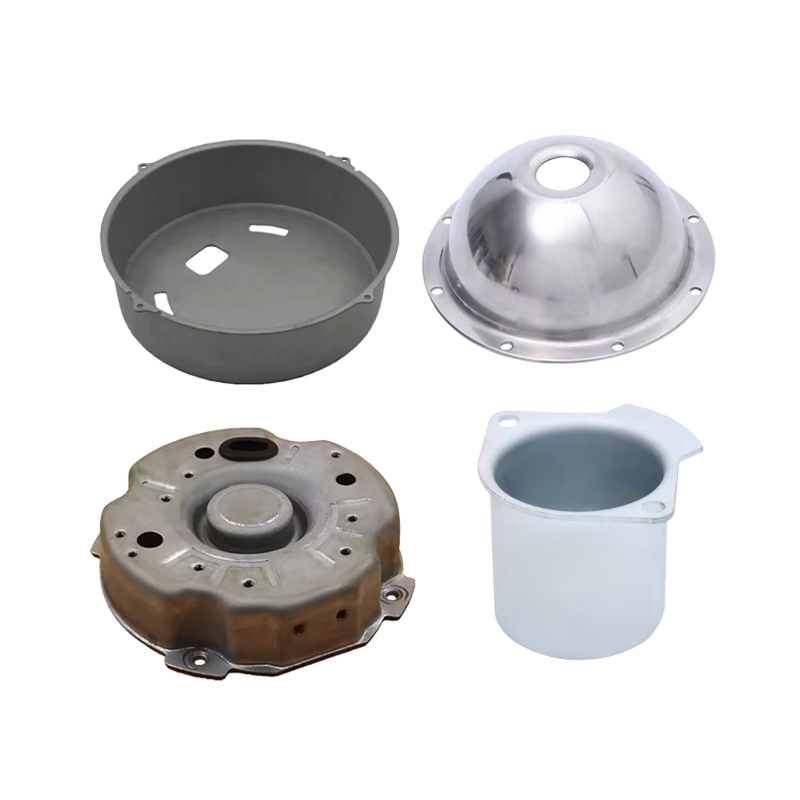 Custom Metal Stamping Bending and Deep Drawing ServicesOEM stamping, bending, and deep drawing for crimp contacts, with in-house tooling that enables prompt dimensional corrections after trial runs.View Product →
Common Questions About Crimp Terminals
Do crimp terminals need soldering after crimping?
No. A correctly sized and correctly crimped joint needs no solder. Solder stiffens the strand area where the wire leaves the barrel, and that stiffened section is where fatigue cracks begin in vibrating applications. Soldering belongs to solder cup connectors and a few very small wire sizes, not to a proper crimp.
How can I tell whether a crimp is good?
Measure the crimp height on the wire barrel, confirm it sits inside the tooling tolerance, then check the bell mouth, the insulation support and any cut strands. Finish with a pull test at the value stated in the terminal datasheet. All three checks together, not any one of them alone.
Can one crimping tool work with every terminal type?
No. Dies are matched to barrel size, barrel style and wire range. A ratchet tool may cover a range of insulated terminals, but using it on a different barrel family produces joints that look closed and still fail testing.
Final Thoughts
Most crimp problems are specification problems that appear later as production problems. Fix the wire class, the barrel, the plating and the tooling as one decision, then verify the joint with measurement rather than with appearance. That approach costs a few hours at the drawing stage and saves entire production lots at the crimping station.
Curtain Hooks for Motorhomes: Metal Options, Installation, and Custom Manufacturing
A Complete Campervan Sink Installation Kit Guide: Parts, Fit, and Leaks
related products
Send An Inquiry
Don't hesitate to contact when you need us!
Whether you want to become our partner or need our professional guidance or support in product selections and problem solutions, our experts are always ready to help within 12 hours globally
contact Us
Phone:+86 139-5824-9488
FAX :+86 574-86150176
E-mail: [email protected] [email protected]
Address: Unit 2, Building 19, Zhichuangzhizao Park, Chengdong Industrial Zone, Xiangshan, Ningbo,315705, Zhejiang, China
Product Category
Mobile