中文简体
中文简体 Español
Industry News
Jun 05,2026
What are the advantages of stainless steel sinks?
Content
- 1 Exceptional Corrosion and Rust Resistance
- 2 Superior Durability and Impact Resistance
- 3 Hygienic Surface Properties
- 4 Cost-Effectiveness Across the Full Ownership Lifecycle
- 5 Versatility in Design, Configuration, and Installation
- 6 Environmental Sustainability and Recyclability
- 7 Compatibility with Modern and Traditional Kitchen Aesthetics
- 8 Stainless Steel Sinks Compared to Alternative Materials
- 9 Ease of Cleaning and Daily Maintenance
- 10 Manufacturing Precision and the Importance of Quality Fabrication
Stainless steel sinks offer a compelling combination of durability, hygiene, affordability, and versatility that few other sink materials can match. They resist corrosion, withstand heat and impact, repel bacteria, and blend naturally into nearly any kitchen or bathroom design. For homeowners, contractors, and commercial operators alike, stainless steel remains the most widely chosen sink material in the world — and for very practical reasons.
At Ningbo Dasheng Metal Products Co., Ltd, we specialize in metal stamping, deep drawing, and welding for precision metal components across a wide range of industries. Our expertise in working with high-grade stainless steel gives us a thorough, hands-on understanding of what makes this material perform so consistently well in demanding applications like kitchen and utility sinks. The following analysis draws on that technical foundation to explain exactly why stainless steel sinks continue to lead the market.
Exceptional Corrosion and Rust Resistance
The defining advantage of stainless steel as a sink material is its resistance to corrosion. This property comes from the chromium content in the alloy — stainless steel used in kitchen sinks typically contains at least 10.5% chromium by mass, which reacts with oxygen in the air to form a thin, stable chromium oxide layer on the surface. This passive layer is self-repairing: if the surface is scratched, the oxide layer reforms almost immediately when exposed to air or water.
The two grades most commonly used in sink manufacturing are 304 stainless steel (18% chromium, 8% nickel) and 316 stainless steel (16% chromium, 10% nickel, 2% molybdenum). Grade 304 is the standard for residential and light commercial sinks, offering excellent corrosion resistance against water, food acids, and common cleaning chemicals. Grade 316 adds molybdenum, which provides superior resistance to chloride-induced pitting — making it the preferred choice for marine environments or commercial kitchens where salt-heavy foods are processed regularly.
This built-in protection means a properly maintained stainless steel sink will not rust, pit, or degrade from routine exposure to water and cleaning agents over decades of use — a claim that cannot be made reliably for porcelain, cast iron with a chipped enamel surface, or composite materials.
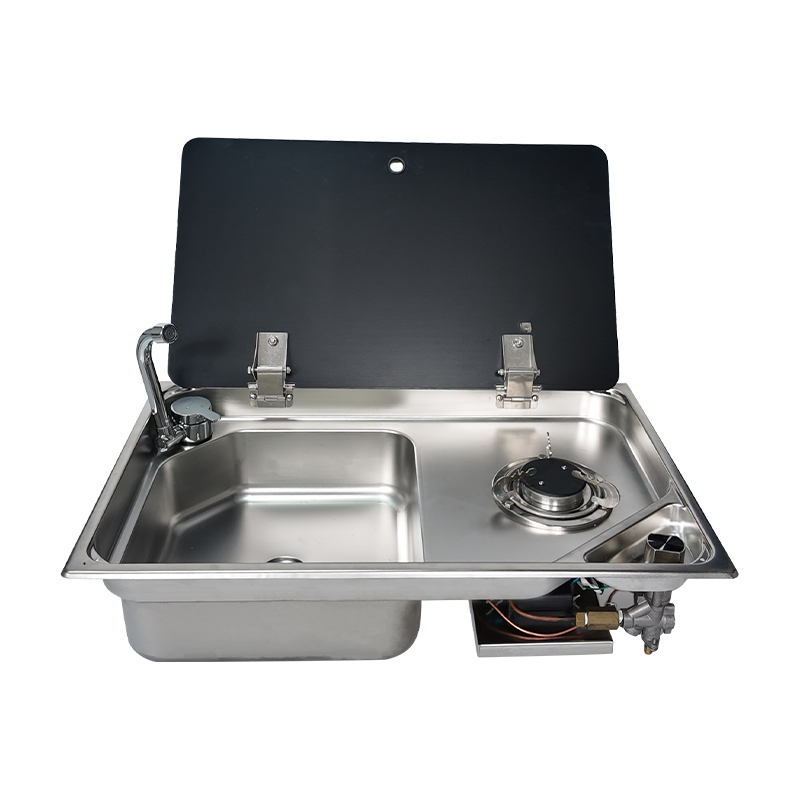
Superior Durability and Impact Resistance
Stainless steel is a mechanically robust material that absorbs impact without cracking, chipping, or fracturing. In a kitchen environment where heavy pots, cast iron cookware, and glass items are regularly placed in or dropped into the sink, this resilience is directly relevant. Porcelain and ceramic sinks, while visually appealing, are vulnerable to chipping and cracking under impact — damage that is both cosmetic and structural, exposing the base material to moisture and corrosion.
The gauge of the stainless steel sheet used in sink fabrication determines its physical stiffness and sound-damping characteristics. Gauge numbers run inversely to thickness — a 16-gauge sink (approximately 1.5 mm thick) is significantly sturdier than an 18-gauge sink (approximately 1.2 mm), which in turn outperforms a 20-gauge or 22-gauge model. Professional and high-end residential sinks typically use 16-gauge material, while entry-level models use 18 or 20 gauge.
| Gauge | Approximate Thickness | Typical Application | Noise Level |
|---|---|---|---|
| 16 | 1.5 mm | Professional / High-end residential | Low |
| 18 | 1.2 mm | Standard residential | Moderate |
| 20 | 0.9 mm | Budget / Entry-level | Higher |
| 22 | 0.75 mm | Low-cost / Utility | Highest |
Quality manufacturers apply sound-dampening pads or spray-on undercoating to the underside of stainless steel sinks to reduce the resonance caused by running water and dropped items. This treatment, combined with a thicker gauge, brings the acoustic performance of stainless steel sinks close to that of heavier materials like cast iron.
Hygienic Surface Properties
Stainless steel is a non-porous material, which means it does not absorb liquids, food particles, or microbial matter. This property is fundamental to hygiene. Porous sink materials — certain composites, unsealed stone, or aged ceramics with micro-cracks — can harbor bacteria, mold, and odors within the material itself, where cleaning products cannot reach effectively. Stainless steel has no such vulnerability.
This is one of the primary reasons stainless steel is the mandatory material of choice in commercial food service environments regulated under food safety standards in most countries. Professional kitchens in restaurants, hospitals, and food processing facilities use stainless steel sinks and surfaces precisely because the material can be thoroughly sanitized with standard cleaning agents without degrading, staining, or retaining contaminants.
For residential use, the same non-porous quality means that rinsing raw meat, fish, or vegetables in a stainless steel sink and then wiping it down with a food-safe cleaner leaves the surface genuinely clean — not merely visually clean. This reduces cross-contamination risk in a meaningful and practical way.
Heat and Chemical Tolerance
Stainless steel sinks can withstand temperatures up to approximately 300°C (572°F) without structural damage, discoloration, or warping. This means you can place a pot just removed from the stove directly into the sink without concern. By contrast, composite resin sinks can be permanently scorched by hot cookware, and some enamel-coated sinks may crack under sudden thermal shock.
Most standard household cleaning products — including bleach-based cleaners, degreasers, and acidic descalers — are safe to use on stainless steel in appropriate concentrations. The surface resists chemical attack from mild acids found in food (citrus, vinegar, tomato) and from alkaline cleaning agents, making maintenance straightforward and flexible.
Cost-Effectiveness Across the Full Ownership Lifecycle
The purchase price of a stainless steel sink is typically lower than that of comparable cast iron, fire clay, or natural stone alternatives, while offering a service life that is competitive with or superior to all of them. Entry-level stainless steel sinks are available at very accessible price points, and mid-range to professional-grade models remain significantly more affordable than premium alternatives in other materials.
Beyond the purchase price, stainless steel sinks require minimal maintenance investment over their lifespan. They do not need sealing, refinishing, or special cleaning products. A mild dish soap and a soft cloth are sufficient for routine cleaning. Periodic polishing with a dedicated stainless steel cleaner restores the surface's appearance and removes water spots, but this is an aesthetic choice rather than a structural necessity.
When considering replacement costs, stainless steel also holds an advantage: because the material is uniform and non-composite, a stainless steel sink that sustains damage from an extreme impact can often be repaired by a professional. Welded seams can be refinished, and surface scratches — while visible — do not compromise the sink's functional integrity or hygiene properties.
Versatility in Design, Configuration, and Installation
Stainless steel is one of the most formable metals available for precision manufacturing. Through processes such as deep drawing, stamping, and welding — core competencies at Ningbo Dasheng Metal Products Co., Ltd — stainless steel sheet can be shaped into virtually any sink configuration with tight tolerances and consistent wall thickness. This manufacturing flexibility translates into an enormous variety of available sink designs for the end consumer.
Common configurations available in stainless steel include:
- Single basin: Ideal for smaller kitchens or utility rooms where a single large bowl is preferred for washing oversized pots and baking trays.
- Double basin: Allows simultaneous washing and rinsing, or separation of clean and dirty items — the most popular configuration in residential kitchens.
- Undermount: Installed beneath the countertop for a seamless, easy-to-clean edge — particularly popular in modern kitchen designs.
- Top-mount (drop-in): Drops into a cut-out in the countertop with a visible rim — easier to install and compatible with any countertop material.
- Apron-front (farmhouse): Features an exposed front panel extending to the cabinet face, offering a distinctive aesthetic with full stainless steel consistency.
- Utility / laundry: Deep basins designed for heavy-duty cleaning tasks, available in extra-large sizes up to 24 inches deep.
Surface finishes also vary significantly, giving designers and homeowners further flexibility. The most common finishes include brushed (satin), mirror-polished, and embossed textures. Brushed finishes are the most practical for everyday use because they hide minor scratches and water spots far more effectively than a mirror-polished surface.
Environmental Sustainability and Recyclability
Stainless steel is one of the most recycled materials on earth. According to data from the global stainless steel industry, over 80% of stainless steel products are recovered and recycled at the end of their service life. Because the alloy retains its chemical properties through the recycling process, recycled stainless steel is functionally equivalent to virgin material — a circular material loop that few other sink materials can match.
This is a meaningful sustainability advantage compared to composite and acrylic sinks, which are typically not recyclable and end up in landfill at the end of their use. Even porcelain and ceramic, while technically inert, are not easily recycled into new functional products. A stainless steel sink that has served its purpose in a residential kitchen for 25 to 30 years can be melted down and remanufactured into new stainless steel products with no degradation in quality.
The long service life of stainless steel sinks further reduces their environmental footprint. A sink that requires replacement every five to ten years due to cracking, chipping, or staining generates significantly more manufacturing waste and carbon emissions over a 30-year period than a single stainless steel sink installed and maintained properly throughout that same timeframe.
Compatibility with Modern and Traditional Kitchen Aesthetics
The visual neutrality of stainless steel is a practical design asset. Its cool, metallic tone integrates naturally with stainless steel appliances — ranges, refrigerators, dishwashers, and range hoods — creating a cohesive, professional appearance that has become a benchmark of the modern kitchen. At the same time, a brushed stainless steel sink works equally well in a traditional or farmhouse-style kitchen where warm wood tones and stone countertops dominate, because the material does not compete visually but complements the surrounding palette.
Unlike colored or tinted sink materials that can look dated as design trends shift, stainless steel's appearance is timeless. A kitchen renovation centered around a stainless steel sink will not require sink replacement simply because the color goes out of fashion — a consideration that has real financial implications for homeowners who plan renovations with resale value in mind.
Resale Value Contribution
Real estate professionals consistently identify kitchen upgrades as among the highest-return improvements for resale value. A well-maintained stainless steel sink — particularly an undermount model in a high-gauge thickness — is a recognized quality signal to prospective buyers. It communicates durability and easy maintenance, two qualities that appeal broadly across buyer demographics. This makes stainless steel sinks a commercially rational choice even purely from an investment perspective.
Stainless Steel Sinks Compared to Alternative Materials
To fully appreciate what stainless steel offers, it is useful to compare it directly against the main alternative sink materials available on the market today.
| Material | Durability | Hygiene | Heat Resistance | Recyclability | Relative Cost |
|---|---|---|---|---|---|
| Stainless Steel | Excellent | Excellent | Excellent | Excellent | Low – Medium |
| Cast Iron (Enamel) | Good (chips) | Good | Good | Partial | High |
| Porcelain / Ceramic | Moderate (cracks) | Good (if uncracked) | Moderate | Poor | Medium |
| Composite Granite | Good | Moderate | Moderate | Poor | Medium – High |
| Acrylic / Resin | Low – Moderate | Moderate | Poor | Poor | Low |
Across the five criteria most relevant to long-term satisfaction — durability, hygiene, heat resistance, recyclability, and cost — stainless steel scores consistently well in every category, while each alternative material shows at least one significant weakness. This balanced profile explains why stainless steel accounts for the majority of kitchen sink installations globally.
Ease of Cleaning and Daily Maintenance
One of the most underappreciated advantages of stainless steel sinks is how straightforward they are to keep clean. The non-porous surface resists the adhesion of food residue, grease, and limescale, meaning that most messes can be removed with warm water and a small amount of dish soap. For tougher deposits such as hard water scale or dried food, a soft cloth with a mild abrasive cleaner restores the surface without scratching.
The key maintenance practices for preserving a stainless steel sink's appearance and function over time are straightforward:
- Rinse and dry after each use: Water spots and mineral deposits are prevented by drying the sink surface rather than letting water evaporate naturally.
- Clean in the direction of the grain: Brushed stainless steel has a visible grain direction. Cleaning along the grain rather than across it minimizes the appearance of new fine scratches.
- Avoid steel wool or harsh abrasives: These can leave iron particles embedded in the surface, which may eventually rust. Use soft cloths, nylon scrubbers, or dedicated stainless steel pads.
- Remove standing water from the basin: Although stainless steel resists corrosion, prolonged standing water containing chlorinated tap water can eventually contribute to surface staining in hard-water areas.
- Apply a stainless steel polish periodically: A thin coat of dedicated polish or mineral oil repels water and restores a uniform sheen, addressing the micro-scratches that accumulate with normal use.
These maintenance requirements are minimal compared to materials that require periodic sealing, professional refinishing, or specialized cleaning products. The time and cost investment to keep a stainless steel sink in excellent condition over decades is genuinely low.
Manufacturing Precision and the Importance of Quality Fabrication
The advantages described above are not automatic — they depend significantly on the quality of the manufacturing process. A stainless steel sink made from a lower-grade alloy, with inconsistent wall thickness, poorly finished welds, or inadequate surface treatment will underperform in every category compared to one produced to precise specifications.
At Ningbo Dasheng Metal Products Co., Ltd, our manufacturing approach centers on precision at every stage. The deep drawing process used to form sink basins must maintain consistent metal thickness throughout the draw — thinning at the corners or base compromises structural integrity and accelerates corrosion at stress points. Our stamping and welding capabilities allow us to produce components that meet exact dimensional specifications with tight tolerances, ensuring that every finished sink performs as the design intends.
Key fabrication quality indicators to look for in a finished stainless steel sink include:
- Consistent wall thickness: No visible thinning at corners or drain areas, which would indicate over-drawing during manufacturing.
- Smooth, fully finished welds: Welds at seams and drain collars should be ground smooth and passivated — rough or exposed welds are corrosion initiation points.
- Correct alloy grade: The sink should be clearly marked with its steel grade (304 or 316) so the buyer can verify the material specification.
- Uniform surface finish: The brushed or polished finish should be consistent across the entire surface, with no patchy areas indicating inconsistent polishing or surface defects in the base material.
- Sound-dampening treatment: For thinner gauges, the underside should show evidence of applied sound-dampening pads or coating to reduce noise during use.
Understanding these quality markers helps buyers distinguish a sink that will deliver on all the advantages of stainless steel for decades from one that merely resembles a quality product on the surface. The material's inherent properties are only fully realized when it has been fabricated with the care and precision the alloy deserves.
Why Choose Pallet Feet & Nesting Plugs?
What Benefits Do Pallet Feet & Nesting Plugs Offer for Warehousing?
related products

Send An Inquiry
Don't hesitate to contact when you need us!
Whether you want to become our partner or need our professional guidance or support in product selections and problem solutions, our experts are always ready to help within 12 hours globally
contact Us
Phone:+86 139-5824-9488
FAX :+86 574-86150176
E-mail: [email protected] [email protected]
Address: Unit 2, Building 19, Zhichuangzhizao Park, Chengdong Industrial Zone, Xiangshan, Ningbo,315705, Zhejiang, China
Product Category
Mobile