中文简体
中文简体 Español
Industry News
Jun 26,2026
How to Choose Quality Deep Drawing Parts?
Content
- 1 What Is Deep Drawing and Why Quality Matters
- 2 Key Quality Indicators to Evaluate Before Ordering
- 3 Common Deep Drawing Defects and How Quality Suppliers Prevent Them
- 4 Material Selection for Deep Drawing Quality
- 5 Dimensional Tolerances and Surface Finish Standards
- 6 Quality Control Systems and Inspection Capabilities
- 7 Evaluating the Supplier's Manufacturing Experience and Capabilities
- 8 The Role of Prototyping and First Article Inspection
- 9 Secondary Operations and Surface Treatment Quality
- 10 Cost vs. Quality: Finding the Right Balance
- 11 Industry Applications and Part Complexity Considerations
- 12 Why Partner with an Experienced Deep Drawing Specialist
Choosing quality deep drawing parts starts with one non-negotiable principle: the part must meet your dimensional tolerances, material specifications, and surface finish requirements without defects such as wrinkling, tearing, or springback. To achieve this consistently, you need to evaluate the manufacturer's material sourcing, tooling precision, process controls, and quality inspection capabilities — all before placing a production order. This guide walks you through every critical factor so you can make a confident, informed decision.
What Is Deep Drawing and Why Quality Matters
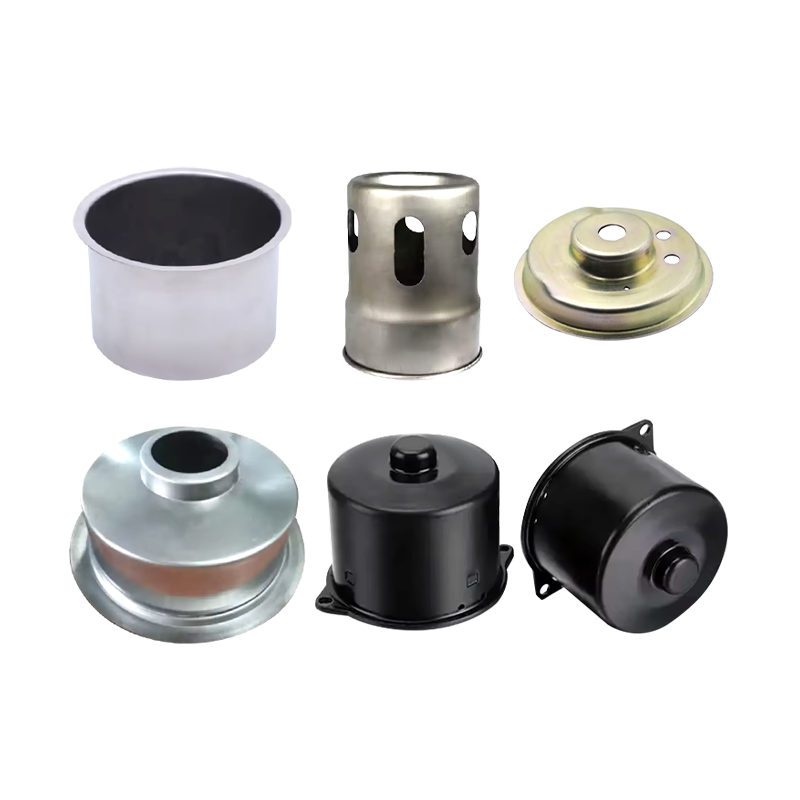
Deep drawing is a metal forming process in which a flat sheet blank is drawn into a die cavity by a punch to produce a cup, shell, or box-shaped part. It is widely used across industries including automotive, aerospace, electronics, medical devices, and consumer appliances because it produces seamless, strong, and lightweight components with minimal material waste.
Quality in deep drawing is critical because even minor deviations in tooling clearance, blank holder force, or lubrication can result in rejected parts. Industry data indicates that poor process control can lead to scrap rates of 5%–20% in deep drawing operations, driving up cost per good part and delaying delivery schedules. When sourcing deep drawn parts from an external supplier, understanding what separates a high-quality manufacturer from an average one protects your supply chain.
Key Quality Indicators to Evaluate Before Ordering
Before committing to a supplier, review the following indicators systematically. Each one directly predicts whether the parts you receive will perform as required.
Material Certifications and Traceability
A reputable deep drawing manufacturer sources raw material from certified mills and can provide material test reports (MTRs) that confirm chemical composition, mechanical properties such as yield strength and elongation, and compliance with standards like ASTM, DIN, or JIS. Elongation values above 30% in low-carbon steel, for example, indicate the material will draw cleanly without fracturing. If a supplier cannot produce traceability documents, consider it a red flag.
Tooling Design and Maintenance Standards
The die and punch set determines the shape accuracy and surface quality of every part produced. High-quality tooling is manufactured to tight tolerances — typically ±0.01 mm to ±0.05 mm — and is made from hardened tool steel or carbide to sustain millions of cycles without excessive wear. Ask your supplier about their tooling material grades, typical tool life, and scheduled maintenance intervals. Well-maintained tooling directly translates to consistent part dimensions throughout a production run.
Draw Ratio and Wall Thickness Uniformity
The limiting draw ratio (LDR) is the maximum ratio of blank diameter to punch diameter that can be achieved in a single draw without fracture. For most mild steels, the LDR is approximately 2.0 to 2.3. Parts with deeper geometries require multiple redrawing operations, each adding complexity. A skilled manufacturer controls blank holder pressure and lubrication at each stage to maintain wall thickness uniformity, typically within ±10% of the nominal wall thickness. Verify that your supplier documents thickness measurements at multiple points on sample parts.
Common Deep Drawing Defects and How Quality Suppliers Prevent Them
Understanding potential defects helps you ask the right questions when evaluating a supplier's process control capabilities.
| Defect | Cause | Prevention Method |
|---|---|---|
| Wrinkling | Insufficient blank holder force | Optimized blank holder pressure control |
| Tearing / Fracture | Excessive draw ratio or insufficient lubrication | Multi-stage drawing, proper lubrication selection |
| Earing | Anisotropy in sheet material | Material selection with low planar anisotropy (r-value) |
| Springback | Elastic recovery after forming | Die overbend compensation and process simulation |
| Surface Scratches | Die roughness or contaminants in lubricant | Regular die polishing and clean lubrication systems |
| Thickness Variation | Uneven blank holder force or worn tooling | Periodic tooling inspection and force calibration |
When reviewing samples from a potential supplier, inspect parts carefully under adequate lighting for any of the defects listed above. Request dimensional reports and surface roughness measurements — a quality supplier will provide these without hesitation.
Material Selection for Deep Drawing Quality
The material chosen for a deep drawn part directly determines its formability, strength, corrosion resistance, and suitability for secondary operations such as welding or plating. A knowledgeable manufacturer will help you select the right alloy and grade for your application, not just the cheapest option available.
Commonly Used Deep Drawing Materials
- Low-carbon steel (DC01–DC06): The most widely drawn material. DC04 and DC05 grades offer elongation values of 38%–40%, making them ideal for deep cups and shells. Used extensively in automotive body panels and appliance housings.
- Stainless steel (304, 316): Offers excellent corrosion resistance. Grade 304 is the most commonly deep drawn stainless, but it work-hardens rapidly, requiring careful inter-stage annealing for deep geometries.
- Aluminum (1100, 3003, 5052): Lightweight and corrosion-resistant. Alloy 1100 is the most formable, while 3003 balances formability with moderate strength. Used in aerospace and electronics enclosures.
- Copper and brass: Excellent electrical and thermal conductivity. Brass (C26000) is widely used for electrical connectors and plumbing components due to its superior drawability.
- Titanium: Used in high-performance aerospace and medical applications. Requires specialized tooling, higher forming forces, and careful temperature management.
When evaluating a supplier, confirm they have hands-on experience with your specific material. A manufacturer who routinely works with stainless steel will have the annealing cycles and lubrication protocols dialed in, while one primarily experienced in mild steel may struggle with more challenging alloys.
Dimensional Tolerances and Surface Finish Standards
Specifying and verifying tolerances is one of the most important steps in selecting a quality deep drawing supplier. Overly tight tolerances increase cost unnecessarily, while tolerances that are too loose lead to assembly failures. Work with your supplier to align tolerances with your functional requirements.
Typical Dimensional Tolerances in Deep Drawing
| Dimension Type | Standard Tolerance | Precision Tolerance |
|---|---|---|
| Outer diameter | ±0.10 mm | ±0.03 mm |
| Wall thickness | ±0.05 mm | ±0.02 mm |
| Part height / depth | ±0.15 mm | ±0.05 mm |
| Bottom flatness | 0.20 mm | 0.05 mm |
| Surface roughness (Ra) | 1.6–3.2 µm | 0.4–0.8 µm |
Ask potential suppliers to share first article inspection (FAI) reports or PPAP documentation from previous projects. These documents demonstrate how closely they can hold tolerances in real production conditions, not just ideal laboratory settings.
Quality Control Systems and Inspection Capabilities
A manufacturer's quality management system (QMS) is the backbone of consistent output. At minimum, a serious deep drawing supplier should hold ISO 9001 certification, which requires documented processes for design control, incoming material inspection, in-process monitoring, final inspection, and corrective action. Some industries require additional certifications such as IATF 16949 for automotive or AS9100 for aerospace.
Inspection Equipment to Look For
- Coordinate measuring machines (CMM): Provides three-dimensional dimensional verification to sub-micron accuracy. Essential for complex geometries and tight tolerances.
- Optical comparators and vision systems: Enable rapid profile and feature inspection, especially useful for high-volume production runs.
- Surface roughness testers: Quantify finish quality to ensure parts meet Ra specifications for appearance and function.
- Hardness testers: Verify that work hardening during drawing has not exceeded acceptable levels, particularly important for stainless steel and aluminum parts.
- Leak testing equipment: For parts used in fluid or gas containment, pressure or vacuum leak testing ensures integrity of the drawn shell.
During supplier qualification, request a facility tour or virtual audit to observe inspection equipment in use. Pay attention to whether inspection is integrated into the production workflow (in-process control) rather than limited to end-of-line final inspection only. In-process monitoring catches defects earlier, reducing scrap and rework costs.
Evaluating the Supplier's Manufacturing Experience and Capabilities
Technical equipment matters, but so does the depth of process knowledge a manufacturer brings to your project. The best outcomes come from suppliers who treat your part as an engineering challenge, not just a production task.
Questions to Ask During Supplier Selection
- What press tonnage range do your presses cover, and can you handle the blank size and draw depth my part requires?
- Have you previously produced parts in the same material and with a similar draw ratio to mine?
- Do you design and maintain tooling in-house, or is it outsourced?
- What is your typical first article lead time, and what documentation do you provide with the first article submission?
- What secondary operations — trimming, piercing, welding, surface treatment — can you perform in-house?
- Can you provide references from customers in my industry?
A supplier who answers these questions confidently with specific examples from their production history is far more likely to deliver quality parts consistently than one who responds with generic assurances. Ningbo Dasheng Metal Products Co., Ltd exemplifies this approach: with years of specialization in metal stamping, deep drawing, and welding, their experienced engineering staff collaborates with customers from material and tooling selection all the way through to finished precision parts — ensuring every specification is met with documented quality assurance at each production stage.
The Role of Prototyping and First Article Inspection
Before releasing a new deep drawing part to full production, always require a prototyping or first article phase. This stage lets both you and the manufacturer verify that the tooling, process parameters, and material behave as expected before large quantities of potentially non-conforming parts are produced.
A thorough first article inspection (FAI) package should include:
- Dimensional report with all drawing characteristics measured and recorded
- Material certification (MTR) for the production-representative blank material
- Surface finish measurement report
- Visual inspection report with photographs of critical features
- Functional test results where applicable (leak test, hardness check, coating adhesion)
Never skip the FAI phase to save time or cost. Issues discovered during first article are corrected at the tooling or process level at a fraction of the cost of correcting problems discovered after thousands of parts have been produced. A quality-focused manufacturer will actively encourage this step rather than pressure you to skip it.
Secondary Operations and Surface Treatment Quality
Most deep drawn parts require one or more secondary operations to reach finished part status. The quality of these operations is just as important as the drawing process itself. Having a supplier who performs secondary operations in-house reduces handling damage, shortens lead times, and maintains accountability for the full part.
Common Secondary Operations in Deep Drawing
- Trimming and flanging: Removes the uneven top edge (earing) produced during drawing to achieve a precise finished height.
- Piercing and punching: Adds holes, slots, or cutouts to the drawn shell. Precision piercing dies maintain location tolerances of ±0.05 mm or better.
- Welding: For assemblies that combine drawn shells with brackets, flanges, or other components. MIG, TIG, and spot welding are all common. Weld quality is confirmed by visual inspection, penetration checks, and pull or torque testing.
- Surface treatment: Zinc plating, nickel plating, powder coating, passivation, and anodizing are common finishes that improve corrosion resistance and appearance. Verify that your supplier's finishing processes comply with RoHS, REACH, or other environmental regulations relevant to your market.
- Deburring and cleaning: Stamped and drawn parts typically have burrs and residual lubricant that must be removed before final inspection and shipment.
Cost vs. Quality: Finding the Right Balance
While cost is always a factor, selecting a deep drawing supplier purely on price is a common and costly mistake. The real cost of a part includes not just the unit price but also scrap rates, rework labor, inspection time, delivery delays, and potential field failures. A part that costs 15% more from a quality-certified supplier can easily deliver total cost savings of 30%–50% when downstream failure and rework costs are factored in.
Evaluate total cost of ownership (TCO), not unit price alone. A supplier who invests in modern presses, precision tooling, calibrated inspection equipment, and a certified QMS has higher operating costs — and they reflect those costs in their pricing. Those investments are exactly what generate the consistency and quality you need to protect your product's reliability and your brand's reputation.
When requesting quotations, provide complete and accurate drawings with all tolerances, material specifications, surface finish requirements, and applicable standards clearly stated. Ambiguous specifications lead to corner-cutting and unpleasant surprises at delivery.
Industry Applications and Part Complexity Considerations
The standards for quality in deep drawn parts vary significantly by application. Understanding where your part will be used helps define the right quality requirements to specify with your supplier.
| Industry | Typical Parts | Key Quality Requirements |
|---|---|---|
| Automotive | Body panels, fuel tanks, filter housings | IATF 16949, tight thickness tolerance, corrosion protection |
| Electronics | Enclosures, battery cans, heat sinks | Dimensional precision, EMI shielding integrity, RoHS compliance |
| Medical | Surgical instrument cases, implant housings | ISO 13485, biocompatible materials, Ra ≤ 0.8 µm, full traceability |
| Aerospace | Structural brackets, fuel system components | AS9100, certified material, NDT inspection, lot traceability |
| Consumer Appliances | Cookware, washing machine drums, compressor shells | Surface finish, dimensional consistency, high-volume capability |
Why Partner with an Experienced Deep Drawing Specialist
The difference between a commodity metal former and a true deep drawing specialist becomes evident the moment your part involves a challenging geometry, a difficult-to-draw material, or tight tolerances. A specialist brings process simulation, application engineering, tooling design expertise, and a documented history of successfully manufactured parts across diverse industries — all under one roof.
Ningbo Dasheng Metal Products Co., Ltd is a manufacturer that brings this integrated expertise to every project. Specializing in metal stamping, deep drawing, and welding for parts and components across a wide range of industries, the company's experienced staff works directly with customers to select the right material, design effective tooling, and manufacture finished precision parts that meet exact specifications and high quality standards. From the initial design review through first article approval and ongoing production, every step is managed with the rigor that quality-critical applications demand.
When choosing a partner for deep drawn components, prioritize suppliers who understand your end application, communicate openly about process capabilities and limitations, and back their quality claims with documented data. That combination — technical expertise, transparent communication, and evidence-based quality assurance — is the foundation of a reliable, long-term supply relationship.
What is the application of pallet feet and nesting plugs in warehousing systems?
How Do Pallet Feet & Nesting Plugs Improve Stackability?
related products
Send An Inquiry
Don't hesitate to contact when you need us!
Whether you want to become our partner or need our professional guidance or support in product selections and problem solutions, our experts are always ready to help within 12 hours globally
contact Us
Phone:+86 139-5824-9488
FAX :+86 574-86150176
E-mail: [email protected] [email protected]
Address: Unit 2, Building 19, Zhichuangzhizao Park, Chengdong Industrial Zone, Xiangshan, Ningbo,315705, Zhejiang, China
Product Category
Mobile