中文简体
 Español
Home / Resources / Industry News / quick release hinges: Applications, Selection Criteria, and Practical Guidance
Industry News
Oct 29,2026
quick release hinges: Applications, Selection Criteria, and Practical Guidance
Content
- 1 Match the Release Mechanism to the Cycle Count
- 2 Where Quick Release Hinges Fail First
- 3 Material and Thickness Choices That Survive Service
- 4 Tolerances That Decide Whether the Pin Binds
- 5 Design Details That Keep Tooling Cost Down
- 6 Coating, Plating and the Knuckle Gap
- 7 A Purchasing Checklist for Custom Hinge Parts
- 8 Where a Stamping and Bending Supplier Fits
A cabinet door on a campervan starts rattling after a few thousand kilometres. A livestock gate latch works loose within a week. An access panel on a machine guard will not close flush any more. In most of these cases the hinge pin is not the culprit. The real cause is that a quick release hinge was selected for convenience alone, without checking what the pin, the lever and the bracket have to survive in service.
The short answer: quick release hinges stay tight only when the release mechanism, the material grade and the bend tolerances are specified together. Get those three aligned and the part can run for hundreds of thousands of cycles. Get them wrong and no amount of tightening will help, because the looseness is built into the geometry from the first stamping run.
Match the Release Mechanism to the Cycle Count
There is no universal quick release design. Each mechanism trades speed of operation against clamping force, cost and tolerance sensitivity, and the right choice depends on how often the joint is opened and how much load it carries while closed.
- Pull pin or clevis pin with a retaining clip. Lowest cost and easiest to replace, but the pin gets lost and the joint rattles once the hole wears. Workable below roughly 5,000 open and close cycles.
- Spring loaded detent pin. One hand operation, good for machine guards and service panels. Needs a controlled spring pocket and a hardened pin, otherwise the detent ball scores the bore and the pin starts to drag.
- Over centre lever. Highest clamping force and the best choice where a gasket has to be compressed. It is also the most tolerance sensitive, because the lever only locks when the pivot geometry falls inside a narrow band.
- Lift off or drop on knuckle. Two half hinges that separate when the door is raised. Cheap and fast, but it rattles unless a nylon or bronze bushing controls the radial play.
- Tool free thumb screw or hand knob. Slowest to operate, most forgiving on tolerance, and often the right answer for parts that are opened a few times a year.
As a rule of thumb, quote the cycle count on the drawing rather than the mechanism name. A supplier who knows the joint will be opened 200,000 times will specify a hardened pin and a tighter bore without being asked.
Where Quick Release Hinges Fail First
Field returns tend to cluster around five points, and four of them are set at the drawing stage rather than in assembly.
- Pin to bore clearance. Above roughly 0.3 mm the joint rattles audibly before it wears out. For quiet operation target 0.05 to 0.10 mm; for hand operated pins in dirty environments 0.10 to 0.20 mm is a reasonable compromise.
- Hole distortion near the bend. A pin hole placed too close to the bend line stretches into an oval during forming, and the pin binds from day one.
- Bend angle drift. Leaf flatness of 0.3 mm per 100 mm is normal for press brake work; over-centre levers often need 0.2 mm or better, or the latch either will not close or closes too easily.
- Coating build up in the knuckle. A 70 micron powder coat adds 0.14 mm across a joint and can seize a hinge that was free before painting.
- Galvanic couple between leaf and pin. A stainless leaf with a zinc plated pin rusts at the bore in wet or washdown conditions, and the rust itself becomes the wear debris.
Material and Thickness Choices That Survive Service
Hinge leaves are usually 1.2 mm to 4.0 mm thick. Thinner sections save weight and cost but reduce the stiffness that keeps the knuckle round under load, which is why thin stainless hinges often feel loose long before they look worn.
| Leaf material | Usual thickness | Pin and mechanism | Practical constraint |
|---|---|---|---|
| Cold rolled low carbon steel | 1.5 to 3.0 mm | Zinc plated steel pin | Lowest cost, but plating quality decides corrosion life |
| Zinc coated steel | 1.5 to 2.5 mm | Zinc plated or stainless pin | Coating thickness must be accounted for in the knuckle gap |
| 304 stainless steel | 1.2 to 3.0 mm | 304 pin, matching grade | Higher springback, so larger bend radius and more press tonnage |
| 5052 aluminium | 2.0 to 4.0 mm | Stainless pin with anti seize | Light and corrosion resistant, but galling risk at the bore |
For washdown, marine or outdoor use, 304 covers most cases and 316 is worth the premium where chlorides are present. If the leaf is steel, the pin should still be stainless or a plated grade with a specified coating weight, because a cheap pin is the fastest way to turn a good hinge into a corroded one.
Tolerances That Decide Whether the Pin Binds
Two dimensions cause most of the disputes between drawing and finished part. The first is hole position relative to the bend. Keep the hole centre at least 2.5 times the material thickness plus the inside bend radius away from the bend line. Anything closer will pull oval in forming, and no inspection argument changes that physics.
The second is the knuckle gap. Leave 0.2 to 0.3 mm of axial clearance per joint on parts that will be painted, and 0.10 mm on bare metal joints that must not rattle. Minimum inside bend radius is roughly one material thickness for mild steel and one and a half thicknesses for annealed 304 stainless; tighter radii risk cracking at the knuckle where the material has already been worked hardest.
It also helps to say how flatness will be measured. A flatness callout of 0.3 mm on a 150 mm leaf means very different things on a surface plate and on a production fixture, and the difference shows up as a door that closes on the bench and not on the vehicle.
Design Details That Keep Tooling Cost Down
Most quick release hinges can be made as one stamped leaf with two bends plus a purchased pin and spring. When the design drifts into a five piece weldment with a machined boss, unit cost typically rises by 40 to 70 percent and lead time doubles, without any gain in function.
Three habits reduce cost at the tooling stage. Form the knuckle from the leaf rather than welding a tube on. Use the same hole diameter for the pin and the mounting screws so one drill or punch size covers both. And keep secondary operations off wear surfaces, since deburring and tumbling after plating or coating will remove exactly the layer that was paid for.
Volume decides the process. Above roughly 50,000 parts a year a progressive die pays for itself quickly. Below 5,000 pieces, laser cutting plus press brake bending with a simple fixture is almost always cheaper, especially for hinges with more than one knuckle length. A supplier that runs both routes can quote the crossover honestly instead of pushing every job onto a die.
Coating, Plating and the Knuckle Gap
Zinc plating at 8 to 12 microns with a trivalent passivation is the standard for indoor steel hinges, and salt spray resistance of 96 to 240 hours is realistic depending on the class specified. Powder coating at 60 to 90 microns gives better impact and UV resistance but must be masked at the knuckle or the parts must be designed with the extra thickness in mind.
Stainless parts still need passivation after tumbling, since embedded free iron from tooling shows up as rust spots within weeks outdoors. Whatever finish is chosen, state clearly which surfaces are wear surfaces and must stay uncoated.
A Purchasing Checklist for Custom Hinge Parts
Send these points with the drawing and most of the back and forth disappears before the first sample is cut.
- Cycle count and typical load, not just the mechanism type.
- Pin to bore clearance range and bore surface finish.
- Which surfaces must remain free of coating or plating.
- Flatness and knuckle gap, with the measuring method named.
- Corrosion requirement expressed in salt spray hours.
- Sample quantity that includes 500 to 1,000 open and close cycles before approval.
- First article inspection report covering hole position, bend angle and knuckle gap.
Material questions usually come up at this point, and a short reference on how to choose materials for metal stamping parts covers the grade selection logic that sits behind the table above.
Where a Stamping and Bending Supplier Fits
Quick release hinges sit squarely in the sheet metal forming family: blanking, piercing, bending, sometimes a shallow draw for the knuckle, then plating or coating. Ningbo Dasheng Metal Products runs that whole chain in house, with presses from 4T to 1000T, stamping capacity up to 1300 x 1000 mm and 20 mm material thickness, deep drawing to 450 mm depth and 1000 mm diameter, plus an in house tool shop and ISO 9001:2015 certification.
For hinge leaves that means one supplier can quote the blank, the bends, the knuckle forming and the finish, and hold the knuckle gap on the same drawing revision throughout. Parts built to drawing or sample are the normal working mode.
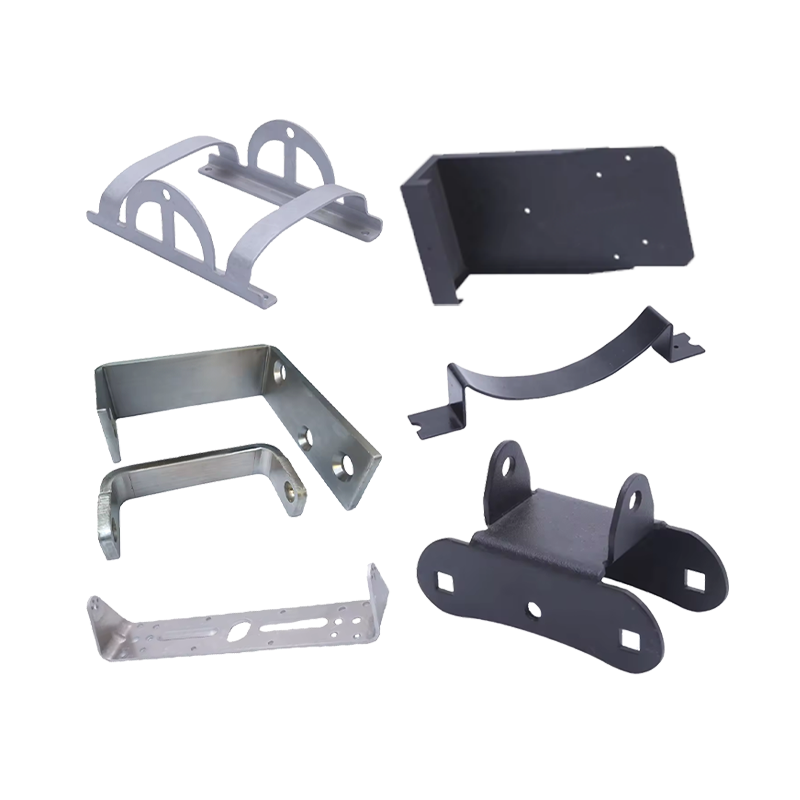 Custom Sheet Metal Fabrication and Stamped Metal PartsProvides custom sheet metal fabrication including bending, laser cutting and stamping for hinge leaves and stamped pockets, with finishes to drawing.View Product →
Where the design needs a heavier leaf or a stamped pocket for a detent spring, the same shop runs high precision stamping work with tooling developed internally, which shortens the loop between a tolerance that will not hold and a die correction.
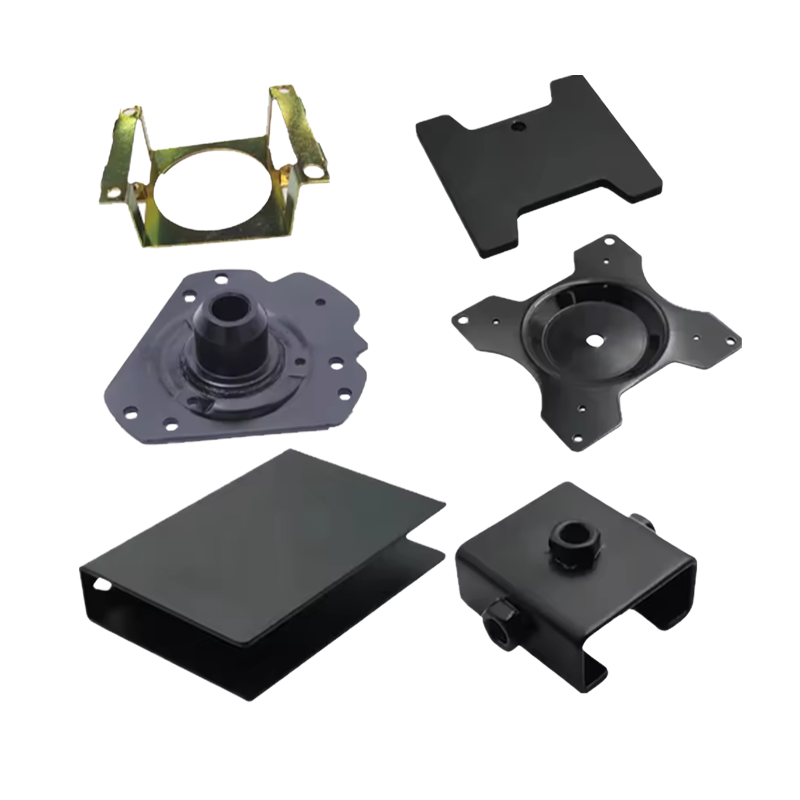 High Precision Metal Stamping and Component ProcessingCustom stamped components with tooling development, presses up to 1000T, bending, welding and finishing for hinge and outdoor-equipment parts.View Product →
Painted hinges and hinges for outdoor equipment usually need bending, welding and powder coating in one flow, which is also handled under the same roof.
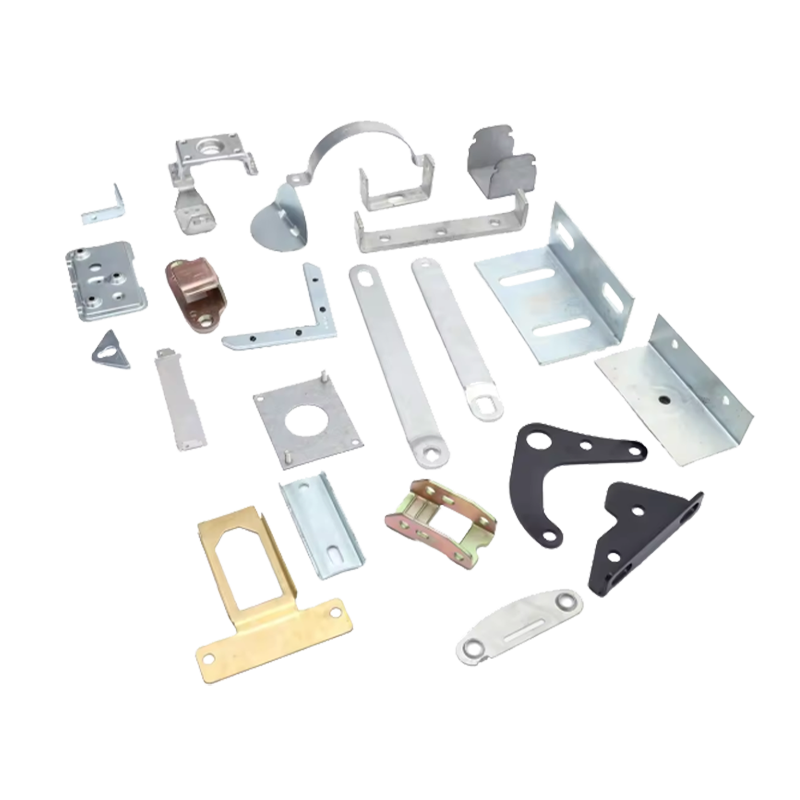 Custom Metal Bending, Stamping and Powder CoatingMade-to-order sheet metal bending, punching and stamping with powder coating for painted hinges, welded frames and precision housings.View Product →
More on the forming side, including bending, laser cutting and welded frames, is listed under custom bending parts.
A quick release hinge is a small part with an unusually tight job: it has to locate, clamp, release by hand and keep doing all three after thousands of cycles. The specification that makes that happen is not complicated, but it has to be written down, covering clearance at the pin, hole distance from the bend, knuckle gap before coating and the material pair for the pin. Drawings that state those four values, alongside cycle count and corrosion hours, generally move from sample to production without the third round of tool changes that eats the schedule.
related products
Send An Inquiry
Don't hesitate to contact when you need us!
Whether you want to become our partner or need our professional guidance or support in product selections and problem solutions, our experts are always ready to help within 12 hours globally
contact Us
Phone: +86 18157484296
FAX: +86 574-86150176
E-mail: [email protected]
Address: Unit 2, Building 19, Zhichuangzhizao Park, Chengdong Industrial Zone, Xiangshan, Ningbo,315705, Zhejiang, China
Product Category
Mobile