中文简体
 Español
Home / Resources / Industry News / Motorhome TV Mounting Bracket: Design, Materials and Custom OEM Sourcing
Industry News
Oct 23,2026
Motorhome TV Mounting Bracket: Design, Materials and Custom OEM Sourcing
Content
- 1 Identify the Substrate Before You Choose the Bracket
- 2 Match Material and Gauge to the Real Load
- 3 Bend Design, Gussets and Welded Assemblies
- 4 Fasteners, Torque and Vibration
- 5 Finish, Corrosion and the Coating You Actually Need
- 6 Tolerances and What to Send a Manufacturer
- 7 A Short Checklist Before You Buy or Tool Up
A 24 inch motorhome TV weighs about 3.5 kg, and a 32 inch screen on a swing arm can reach 8 kg. That mass hangs at the end of a lever, inside a vehicle that pitches, brakes hard and rolls through corners. The static weight you feel when you lift the set is the smallest load the bracket will ever carry. At the rear of a box body on coarse tarmac, vertical accelerations of 3g are routine, so a 6 kg screen briefly loads its mounting like an 18 kg mass, and an extended arm multiplies that again through leverage.
The bracket, not the television, is usually the part that gives way. A motorhome TV mounting bracket has to move that dynamic load into a panel that was never designed to carry it, and it has to stay tight after tens of thousands of kilometres of vibration. Substrate, material gauge, bend design and fastener choice decide whether it does, in that order.
Identify the Substrate Before You Choose the Bracket
Most motorhome and caravan interior walls are a sandwich panel: 25 to 40 mm of foam between a decorative skin and a thin plywood or laminate backing. Pull-out strength in that build-up is low, often a few hundred newtons per screw. Wardrobe sides, bed box frames and aluminium frame members are far stronger, and a bracket bolted into 15 mm plywood or a frame flange will normally outlive the vehicle.
Sort the wall before you shop for brackets. The table below lists the four build-ups you are most likely to meet and what each one can realistically hold.
| Wall build-up | Indicative pull-out capacity | Workable mounting approach |
|---|---|---|
| Decorative skin with 3 mm ply backing over foam | 300 to 500 N per M6 screw | Spread load with a 3 to 4 mm steel backing plate of at least 150 x 150 mm |
| Decorative skin only, 1 to 2 mm laminate or board | Under 200 N | Bolt through to a cabinet frame or add internal reinforcement first |
| 15 to 18 mm plywood cabinet side or bed box | 1.5 to 2.5 kN per M8 bolt | Direct bolt-through with a large washer, no backing plate required |
| Aluminium or steel frame member | 3 kN and above | Direct bolt-through, the bracket fixes straight to the frame flange |
When the wall is a sandwich panel and no frame is within reach, the backing plate does most of the work. A 3 mm steel plate with rounded corners, powder coated and pre-drilled, spreads load over roughly 25 times the area of a bare screw head and turns a marginal fixing into a dependable one.
Match Material and Gauge to the Real Load
Cold rolled steel sheet at 2.0 to 2.5 mm, typically DC01 or SPCC grade, is the default for motorhome TV brackets. It forms cleanly, takes powder coating well and stays inexpensive in volume. Where a bracket sees condensation or coastal air, 304 stainless at 1.5 to 2.0 mm removes the coating question entirely, although it work hardens and needs larger bend radii. Aluminium 5052 at 4 to 5 mm suits weight-critical installations, and 6061 is stiffer but cracks if formed too tightly.
Material behaviour deserves its own check. This guide on how to choose suitable materials for metal stamping parts sets out the trade-offs between strength, formability and cost.
Thickness by Screen Size
- Up to 24 inch screen, fixed bracket: 1.5 to 2.0 mm steel or 4 mm aluminium
- 24 to 32 inch screen, fixed bracket: 2.0 to 2.5 mm steel
- 32 inch and above with swing arm: 2.5 to 3.0 mm steel with a formed rib or gusset
- Backing plates and reinforcement panels: 3.0 to 4.0 mm steel
Swing arm brackets are where under-specified parts show up most often. An arm extended 400 mm turns a 6 kg screen into a bending moment of about 24 Nm at the wall plate, and the plate has to resist that in torsion as well as tension. A bracket rated for a fixed screen should never be reused with an articulating arm.
Bend Design, Gussets and Welded Assemblies
A 90 degree flange 20 mm deep along the long edge of a wall plate can multiply stiffness at almost no material cost. Inside bend radius should be at least one material thickness for mild steel and 1.5 to 2 times thickness for aluminium, otherwise the outer fibre cracks during forming or fatigues later in service. Stamped ribs and embossed beads stiffen the face while keeping it flat.
When a bracket pairs a formed plate with a tubular arm, sheet metal bending services can produce the part as one welded assembly rather than three bolted joints, which removes two potential loosening points. Brackets that steady pipework, cables or interior fittings follow exactly the same rules.
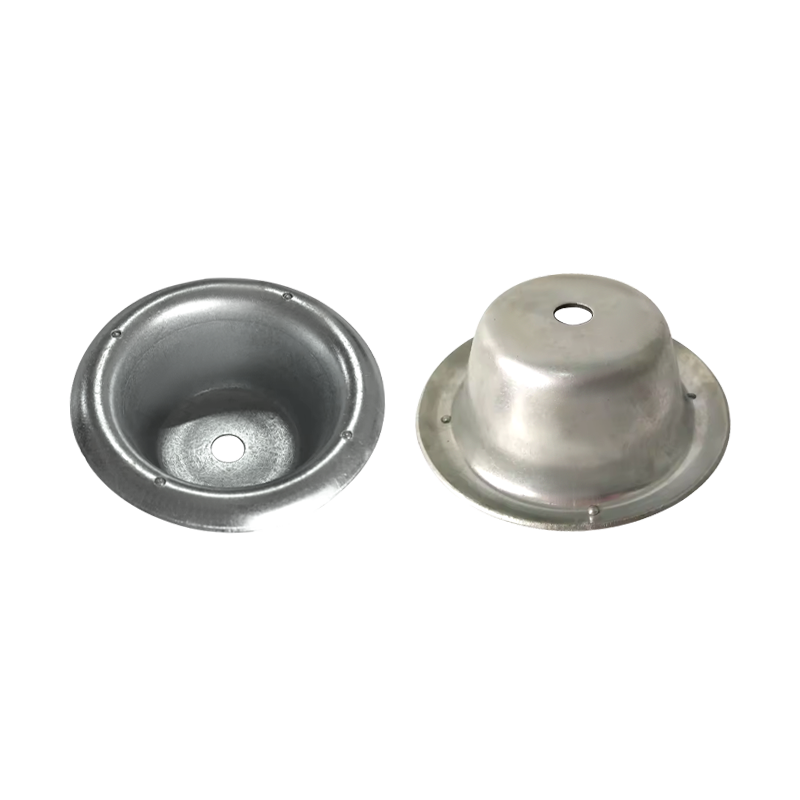 Precision Sheet Metal Pipe Connection Bracket StampingCustom/OEM stamped pipe connection bracket with material and finish options, dimensions per design; useful when specifying a bracket before welded assembly.View Product →
Welded assemblies need their own discipline. MIG or TIG welds on 2 mm steel should sit away from the highest stress corner, and frames should be checked for squareness after welding, because heat pull of 1 to 2 mm across a 300 mm frame is normal. Buying the frame complete with its coating keeps that geometry under one supplier.
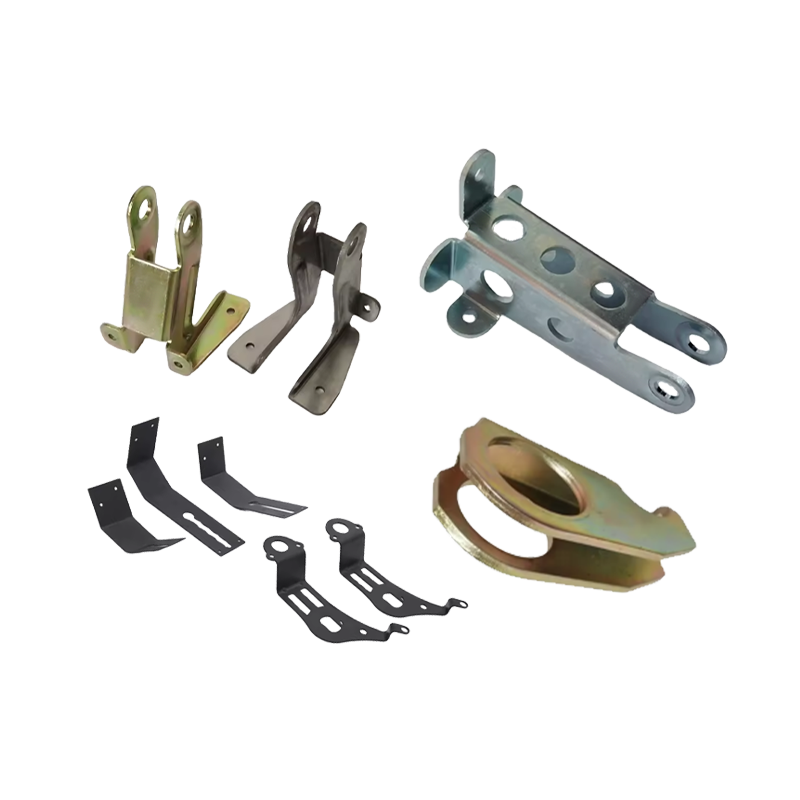 Custom Powder-Coated Welded and Bent Frame PartsCustom welded and bent frame parts with powder coating for corrosion and weather resistance; suited to keeping welded geometry and finish under one supplier.View Product →
Fasteners, Torque and Vibration
Hardware is where economical installations fail. Use M6 or M8 bolts in grade 8.8 or A2 stainless, torque M6 to about 9 to 10 Nm and M8 to about 22 to 25 Nm when tightening dry steel into steel, and rely on nylon insert lock nuts or a medium strength thread locker rather than plain washers. Split washers alone lose preload on a moving vehicle. Rivnuts are convenient but need at least 1.5 mm of sheet to grip, and steel rivnuts hold better than aluminium for anything carrying an arm.
Use slots where alignment matters. A hole 8.5 by 12 mm in place of an 8.5 mm round hole gives the installer 3.5 mm of adjustment in one direction and still transfers full shear load, because the bolt sits in bearing rather than against the slot edge.
Check torque after the first 1,000 km, then once a year. A joint that has relaxed by half a turn is a joint that is already working loose.
Finish, Corrosion and the Coating You Actually Need
Interior motorhome brackets live with condensation rather than rain. Phosphate pretreatment followed by polyester powder coating at 60 to 90 micrometres will usually pass 240 to 500 hours of neutral salt spray, more than an interior part requires. Zinc coated steel with a powder coat top layer is a sensible compromise where the bracket also touches a wet bay or an external locker.
Two finishing details cause most complaints: coating on the faces of bolted joints, which relaxes and lets the joint creep, and bare laser-cut edges on zinc coated sheet. Masking contact faces, or specifying stainless on visible parts, avoids both. Combining forming, punching and coating under one supplier keeps that consistency easier to hold across repeat orders.
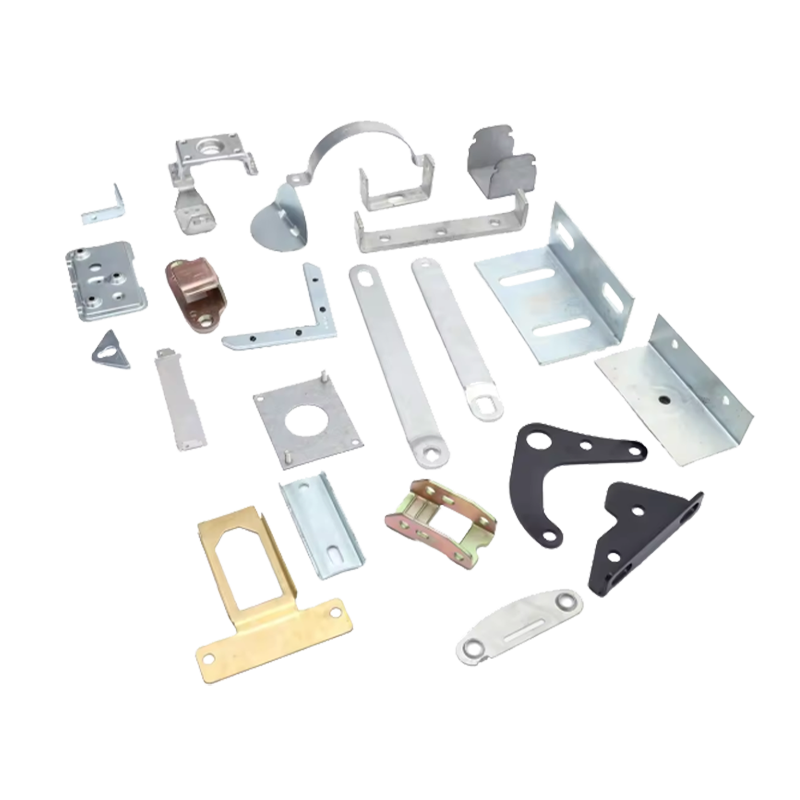 Custom Sheet Metal Bending Punching and Stamping ServiceOEM fabrication for bending, punching and stamping with powder coating options; useful when consolidating formed, punched and coated parts under one supplier.View Product →
Tolerances and What to Send a Manufacturer
For a bracket that bolts to an existing pattern, hole position tolerance of plus or minus 0.1 mm and formed feature tolerance of plus or minus 0.5 mm are normal shop practice and add no cost when the print asks for them. Calling out plus or minus 0.05 mm on a 2 mm bracket usually means a different process and a higher price.
A custom quotation needs a 2D drawing with hole sizes and datums, the material and finish, the static load and whether an arm will be fitted, the mounting substrate, and an annual volume. Volume decides the tooling: laser cut and bent parts make sense from one to a few thousand pieces, while a stamping die is normally justified beyond that, and deep drawing only enters the picture if the bracket includes a cup or housing shape.
Ask for a first article inspection report, the material certificate and the salt spray result for coated parts. A supplier certified to ISO 9001:2015 will hold those documents as standard, not as a favour.
A Short Checklist Before You Buy or Tool Up
- Confirm the substrate and pull-out strength at the exact fixing points.
- Size the bracket for 3 to 5 times the television weight, not the weight alone.
- Add a backing plate if the wall is a sandwich panel with no frame access.
- Use at least 2 mm steel for fixed brackets and 2.5 mm or more for swing arms.
- Specify bend radii of one material thickness or greater to avoid cracking.
- Choose lock nuts or thread locker, then re-torque after the first 1,000 km.
- Match the finish to the exposure: powder coat inside, stainless or zinc plus coating in wet areas.
A motorhome TV mounting bracket costs little compared with the screen it carries, yet it decides whether that screen stays on the wall. Match the bracket to the substrate, buy stiffness rather than thickness alone, and lock the fasteners properly, and the installation will still be sound long after the first season.
related products
Send An Inquiry
Don't hesitate to contact when you need us!
Whether you want to become our partner or need our professional guidance or support in product selections and problem solutions, our experts are always ready to help within 12 hours globally
contact Us
Phone: +86 18157484296
FAX: +86 574-86150176
E-mail: [email protected]
Address: Unit 2, Building 19, Zhichuangzhizao Park, Chengdong Industrial Zone, Xiangshan, Ningbo,315705, Zhejiang, China
Product Category
Mobile