中文简体
 Español
Home / Resources / Industry News / stainless caravan hinged: Applications, Selection Criteria, and Practical Guidance
Industry News
Nov 06,2026
stainless caravan hinged: Applications, Selection Criteria, and Practical Guidance
Content
- 1 Which stainless grade actually belongs on a caravan hinge
- 2 Matching hinge style to the caravan application
- 3 The numbers that decide whether a hinge survives five seasons
- 4 Failure modes seen in the field, and what each one means
- 5 What to put on the drawing when you place an OEM order
- 6 A sample approval checklist for stainless caravan hinges
A locker door that no longer sits flush after two seasons on the road is rarely a manufacturing defect. In most caravans it comes down to four decisions made long before the first trip: the stainless grade, the leaf thickness, the hole pattern, and whether the hinge was isolated from the aluminium frame it is screwed into. Get those four right and a stainless caravan hinged assembly will outlast the furniture board it is fixed to. Get them wrong and no amount of polish will save it.
Caravan hardware lives in a harder environment than most kitchen or bathroom hardware. An outer panel cools overnight, moisture condenses on the inside face, and the hinge sits in that film of water for hours. Add road salt from a winter tow, coastal campsites, and the constant vibration of travel, and the specification stops being a detail and becomes the whole design.
Which stainless grade actually belongs on a caravan hinge
The short answer: 304 for interior furniture, 316 for anything that sees weather or coastal air, and 430 only where the hinge will stay dry for its whole life. The price difference between 304 and 316 is small at component level; the difference in service life near salt water is not.
Grade 304, often called A2 in fastener terms, handles condensation and general humidity well. It is the sensible default for overhead locker hinges, wardrobe hinges and bed box hinges. Grade 316, or A4, carries roughly 2 to 3 percent molybdenum, which is what resists chloride pitting when a hinge sits on an exterior door, a tailgate hatch or a campervan that spends summers near the sea. Grade 430 is a ferritic stainless that is magnetic, cheaper and less corrosion resistant; it is fine for a decorative trim clip inside a dry cupboard, and a poor choice for a shower room door.
One practical note: the spring inside a self-closing concealed hinge is often a separate steel part. If the visible leaf is 316 but the spring is coated carbon steel, the first failure will come from the inside out, and you will not see it until the door stops closing.
Matching hinge style to the caravan application
Hinge style follows the panel, not the other way round. A 35 mm cup hinge needs enough board depth behind the door face; a continuous hinge needs a straight edge and a flat mounting face; a flag hinge needs a frame with enough wall thickness to take the load. The table below sets out the common pairings and the points that most affect service life.
| Hinge style | Usual location | Typical leaf thickness | What to specify |
|---|---|---|---|
| Concealed cup hinge | Overhead lockers, wardrobe doors, kitchen cabinet doors | 1.0 to 1.2 mm | Cup depth clearance, opening angle of 110 or 170 degrees, spring material, clip or screw fixing |
| Butt hinge | Bathroom doors, exterior doors, bed box lids | 2.0 to 3.0 mm | Pin diameter, knuckle length, hole pitch, A4 grade for exterior use |
| Continuous or piano hinge | Long locker lids, bench seats, fold-out tables | 1.5 to 2.0 mm | Load per metre, number of knuckles, rivet or screw fixing, flatness along the full length |
| Flag hinge | Entrance doors, heavier access panels | 2.5 to 4.0 mm | Lift-off or fixed type, bushing material, adjustment range for settlement |
| Friction or stay hinge | Roof vents, small hatches, mirror arms | 1.0 to 1.5 mm | Holding torque, wear at the friction joint, tolerance to repeated adjustment |
The numbers that decide whether a hinge survives five seasons
Vague drawings produce inconsistent hinges. Four values do most of the work, and all four should be written on the drawing rather than left to the supplier's standard practice.
- Leaf thickness: a 20 kg door on two butt hinges needs a 2.5 to 3.0 mm leaf and fixings of at least 4 mm diameter going into a backing plate, not straight into 15 mm lightweight board.
- Hole position tolerance: plus or minus 0.1 mm across the hole pattern. Anything looser and one hinge in a batch will fight the other, which shows up later as a door that will not close squarely.
- Salt spray hours: many caravan builders write 96 to 240 hours neutral salt spray for interior 304 parts and 480 to 720 hours for exterior 316 parts. Ask for the test report on the actual batch, not on a generic certificate.
- Cycle count: 20,000 to 50,000 open and close cycles for a door hinge is a normal commercial expectation. Test the spring and the knuckle play, since those are the first two things to go.
Flatness and burr deserve a line each as well. A leaf that is 0.2 mm out of flat will rock on the panel and crack the surface finish around the screw holes. A burr of 0.05 mm on the face that touches the door will cut through a laminate within a season of vibration.
Failure modes seen in the field, and what each one means
A sagging door usually points to a pin that is 0.2 or 0.3 mm undersized for the knuckle, or to two hinges that were never aligned on the same centre line. Screw holes that have become slots mean the load was carried by the board rather than by a backing plate, which is a mounting design problem rather than a hinge problem.
Brown tea staining on an otherwise sound hinge is the classic signature of 304 exposed to salt air or trapped moisture under a plastic cap. White or grey deposits around a stainless screw threaded into an aluminium extrusion point to galvanic corrosion, where the aluminium sacrifices itself to the stainless. Nylon isolation washers or a sealed interface solve it at almost no cost, and the fix has to happen at design stage because it cannot be retrofitted reliably in the field.
A squeak that appears after a few months is often a dry pin running in a dry knuckle. Specify a bushing or a dry film lubricant rather than grease, since grease collects grit on a caravan door that opens onto a gravel pitch. And if a self-closing hinge arrives with a weakened spring, check the process order: a 304 spring wire that passes through a powder coating cure at 180 to 200 degrees C before assembly can lose part of its temper.
What to put on the drawing when you place an OEM order
Most caravan hinge supply problems start with a drawing that describes the shape but not the material condition. Grade and finish belong on the drawing, for example 304 with a brushed finish to match an adjoining stainless sink, or 316 with passivation after welding. So does the bend radius: 304 work hardens quickly, and a radius tighter than about one times the material thickness invites cracking on the outer bend.
Production itself is straightforward when the tooling is right. Leaves are blanked and pierced in progressive dies, knuckles are formed or rolled, and the knuckle is joined to the leaf by TIG welding or riveting. Deburring in a vibratory tumbler and a passivation step after welding restore the chromium oxide layer that gives stainless its corrosion resistance, which matters most on the weld-affected zone.
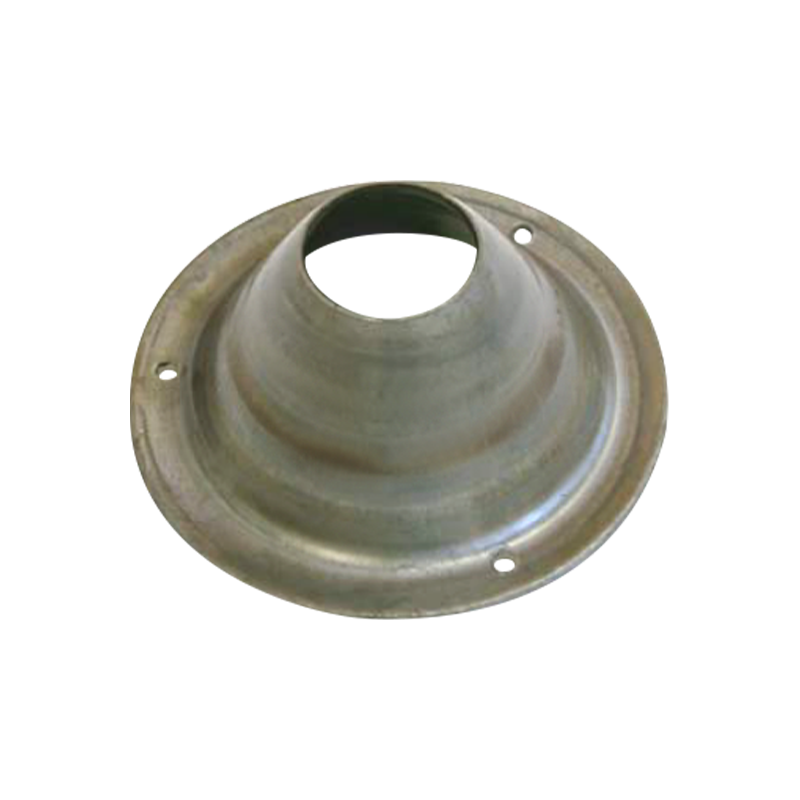
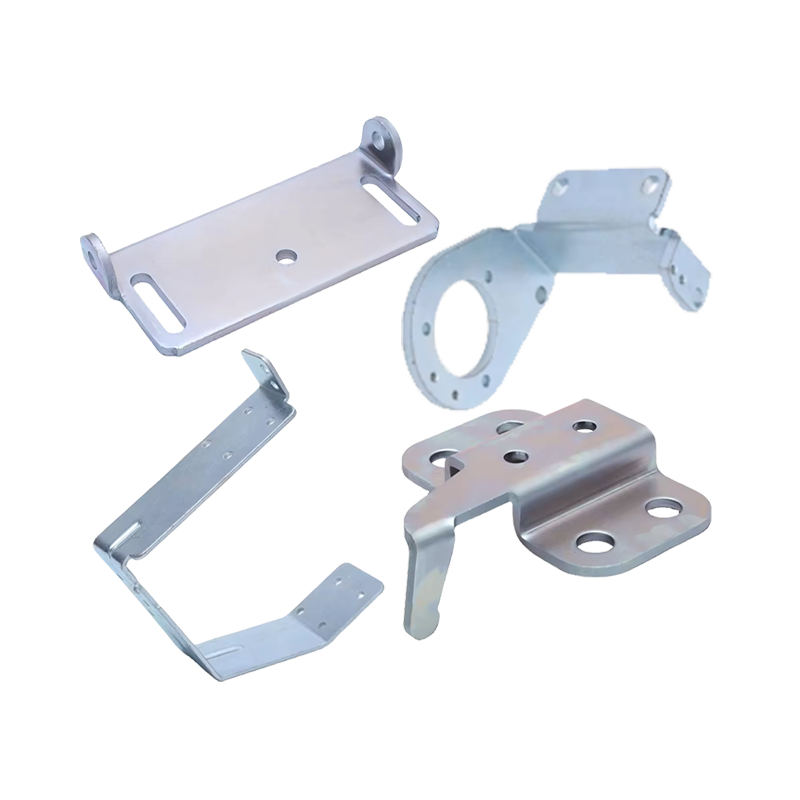 Custom Sheet Metal Stamping and Bending PartsCustom OEM stamped and bent parts in stainless steel, aluminum and other metals, with plating, powder coating, polishing or anodizing for wholesale programmes.View Product →
For buyers comparing suppliers, the useful questions are about equipment and control rather than price per piece. A supplier with presses from 4T to 1000T, hydraulic capacity to 1000T, in-house tool making and ISO 9001:2015 certification can hold a hole pattern across a long production run and handle a drawing change without restarting the tool from scratch. Stamping capacity of 1300 mm by 1000 mm and material thickness up to 20 mm covers essentially any hinge leaf or mounting bracket a caravan programme will need.
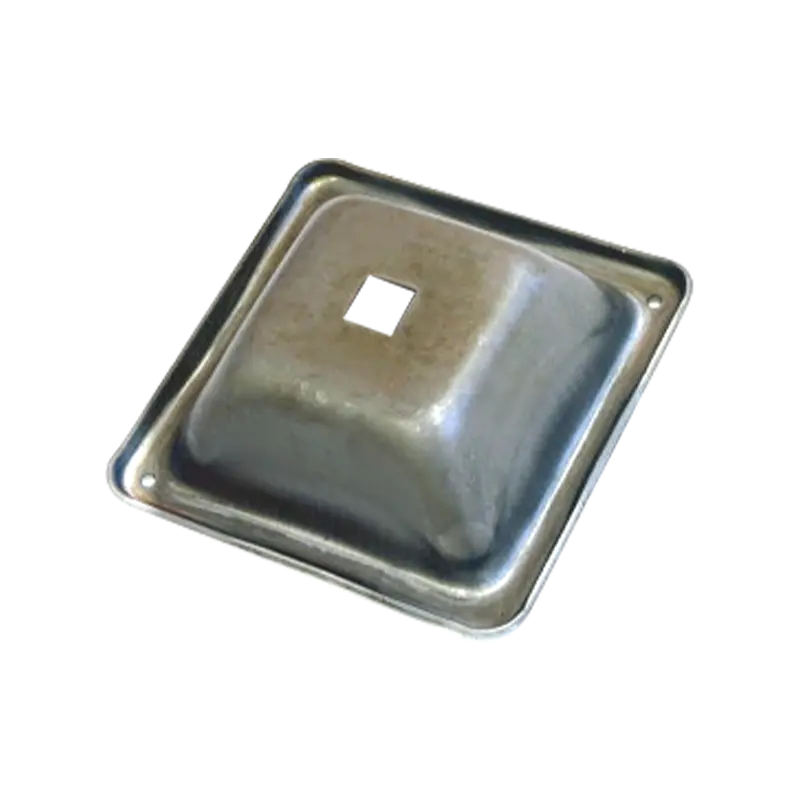
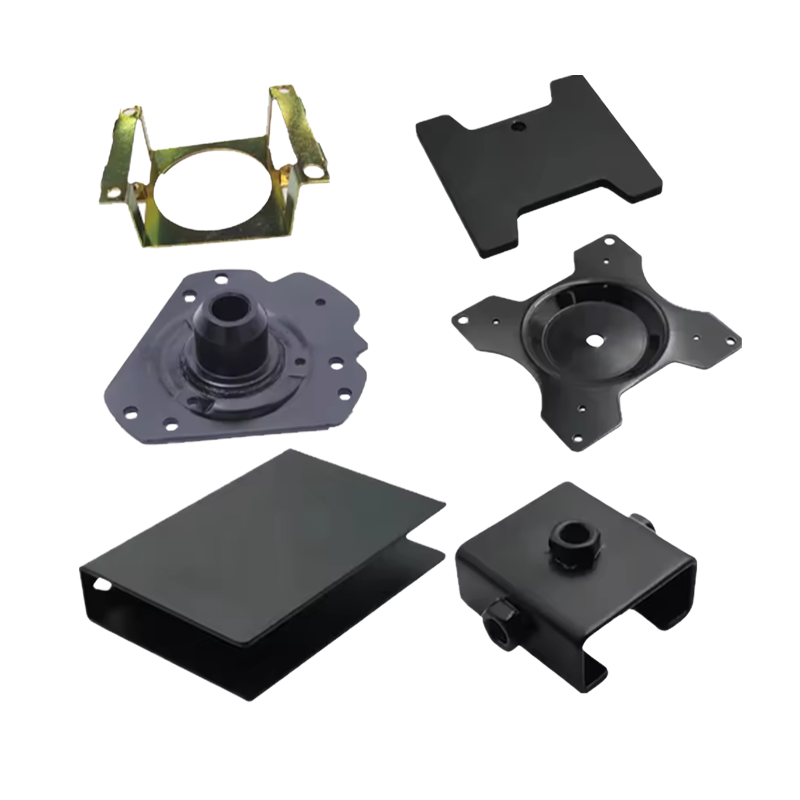 High Precision Custom Metal Stamping ComponentsCustom stamped components made to design in carbon steel, stainless steel, aluminum and other metals, supported by presses up to 1000T and ISO 9001:2015 certification.View Product →
Where a hinge needs a laser cut profile, a welded reinforcement or a powder coated cover plate, it helps to keep those operations with the same supplier so tolerance stack-up is owned in one place. The same logic applies to matching surface finish across the hinge, the sink rim and the handle.
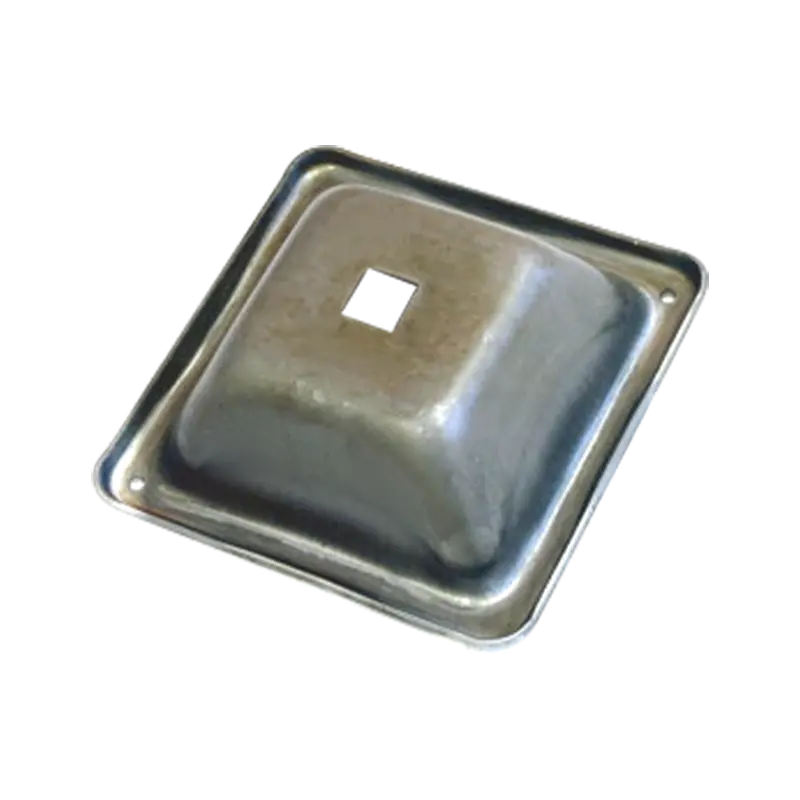
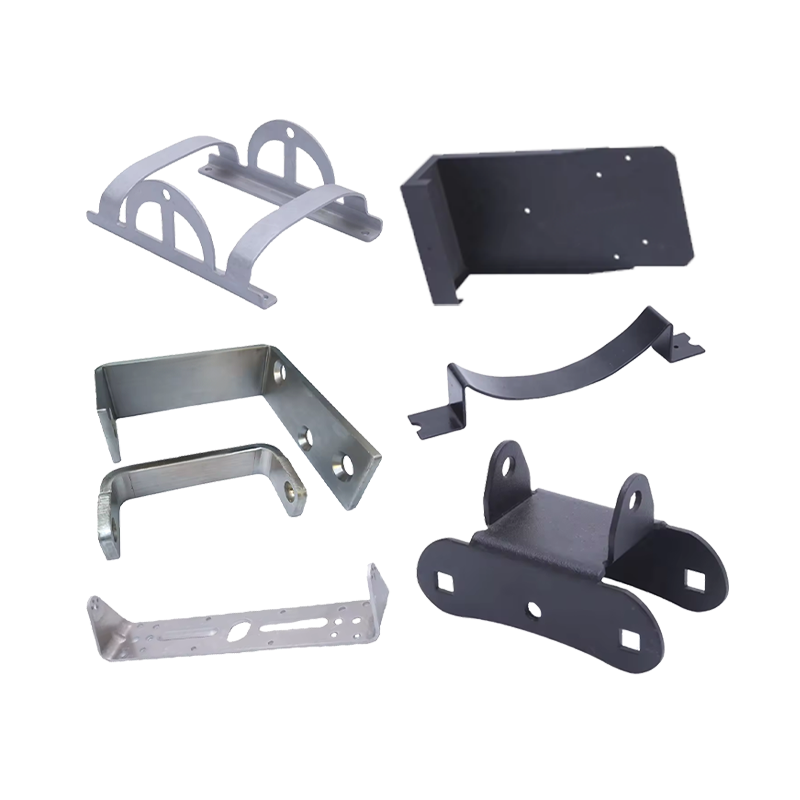 Custom OEM Sheet Metal Fabrication and Stamped PartsMade-to-order laser-cut, bent and stamped metal parts in stainless steel, aluminum and other materials, with plating, powder coating, polishing, anodizing or painting options.View Product →
On the process side, the tooling and equipment choices for stainless stamping are worth reviewing before a drawing is finalised, because they set the practical limits on burr height, flatness and hole quality. Our own engineers refer buyers to this guide on choosing processing equipment and tools for stainless steel stamping parts when a specification looks tight on paper. More background on the manufacturing side of the business is available on the Ningbo Dasheng Metal Products homepage.
A sample approval checklist for stainless caravan hinges
Before a first article is signed off, run through the following points. Each one catches a failure mode that is expensive to correct after tooling is committed.
- Verify the grade with a certificate or a positive material identification test, not with the label on the bag.
- Measure leaf thickness at three points along the leaf, since rolled stainless can vary at the edges.
- Check hole pitch and hole diameter against the drawing with a pin gauge, not a tape measure.
- Open and close the hinge 50 times by hand and feel for play developing at the knuckle.
- Fit the hinge to the actual panel thickness used in production, including any laminate or edge band.
- Run a salt spray test if the hinge is exterior, and inspect the knuckle gap as well as the flat faces.
- Run a fingertip check for burr on the face that contacts the door and on the screw countersinks.
- Compare the finish against the adjoining stainless parts, because a hinge that is a shade lighter than the sink will be noticed by the end customer.
Stainless caravan hinged hardware is a small line item that decides whether a locker door still lines up after five years of towing. Choose the grade by exposure rather than by habit, write thickness, hole tolerance, salt spray and cycle count on the drawing, and test the pin and spring rather than only the visible surface. The rest is ordinary manufacturing discipline, and it shows up in the second owner's opinion of the van.
No next article
stainless steel camper sink: Applications, Selection Criteria, and Practical Guidance
related products
Send An Inquiry
Don't hesitate to contact when you need us!
Whether you want to become our partner or need our professional guidance or support in product selections and problem solutions, our experts are always ready to help within 12 hours globally
contact Us
Phone: +86 18157484296
FAX: +86 574-86150176
E-mail: [email protected]
Address: Unit 2, Building 19, Zhichuangzhizao Park, Chengdong Industrial Zone, Xiangshan, Ningbo,315705, Zhejiang, China
Product Category
Mobile