中文简体
 Español
Home / Resources / Industry News / Handicap Pool Ladder Buying Guide: Codes, Materials and Custom Metal Parts
Industry News
Oct 22,2026
Handicap Pool Ladder Buying Guide: Codes, Materials and Custom Metal Parts
Content
- 1 Start With the Four Numbers That Decide Whether a Ladder Works
- 2 Matching the Ladder Type to the Pool
- 3 Stainless Grade, Weld Finish and Why Good Steel Still Rusts
- 4 How a Custom Ladder Kit Is Actually Built
- 5 What Belongs on the Purchase Specification
- 6 Installation and Maintenance Items That Get Skipped
A maintenance manager at a 120 unit apartment complex buys what the catalogue calls a handicap pool ladder, bolts it to the deck beside an existing step section, and passes inspection. Six months later the anchor plate shows rust blooms, one tread has cracked at the weld toe, and a resident with limited mobility still needs a second person to get out of the water. Nothing about that ladder was defective in the catalogue sense. It was simply specified for the wrong duty.
A handicap pool ladder is not a handrail bolted onto a step. It is a load rated, code referenced exit device that has to carry a wet adult with a shifting center of gravity, survive chlorinated water for a decade, and match the reach and grip dimensions that a person with limited strength or balance can actually use. When those four things are right, the product works. When one of them is wrong, nothing else in the specification saves it. The sections below cover the numbers, the material choices and the fabrication details that decide the outcome.
Start With the Four Numbers That Decide Whether a Ladder Works
Before type, supplier or price, four measurements control whether an adult with a mobility limitation can enter and leave the water unassisted. These come from the 2010 ADA Standards for Accessible Design, which is the benchmark most commercial pools, hotels, therapy pools and municipal facilities are measured against.
- Handrail outside diameter of 32 mm to 38 mm, or 1.25 in to 1.5 in. A rail that is too thick cannot be closed around by a small or arthritic hand, and one that is too thin cuts into the palm when the user transfers body weight.
- Handrail height of 760 mm to 965 mm, or 30 in to 38 in, measured above the stair tread nosing rather than above the deck surface.
- Treads 254 mm to 279 mm deep, or 10 in to 11 in, with risers of 178 mm to 190 mm, or 7 in to 7.5 in. Deeper treads push the last step away from the rail, and shallower ones force a stepping motion that many users cannot repeat safely.
- Load rating. Residential ladders are commonly rated at 136 kg, or 300 lb. Commercial, rental and hotel installations should be specified at 181 kg, or 400 lb, or higher, because of repeated daily use and the extra weight of wet clothing and rescue assistance.
A fifth number never appears on the drawing but matters just as much: rail extension. The handrail should continue at least 305 mm, or 12 in, horizontally past the top tread so the user can pull upright after the final step instead of releasing the rail while still leaning forward.
Matching the Ladder Type to the Pool
The 2010 ADA Standards require two accessible means of entry for pools with more than 300 linear feet of pool wall, and the primary one must be a lift or a sloped entry. A ladder or stair section normally serves as the secondary route. That distinction matters at purchase time, because it determines whether a standard catalogue ladder is acceptable or whether the facility needs a wider stair section with two rails and deeper treads.
| Type | Typical installation | Key specification | Common failure |
|---|---|---|---|
| Fixed stainless ladder, two to four treads | In-ground concrete and gunite pools | 304 or 316 tube, deck anchor sockets, bonded frame | Corrosion at the socket when the deck penetration is not sealed |
| Above-ground ladder with deck flanges and top rail | Vinyl liner pools, seasonal rentals, holiday lets | Flange plate of 3 mm to 4 mm, tube wall of at least 1.5 mm | Flange flex and cracking when thin wall tube is used with a long span |
| Wide stair section with dual handrails | Hotels, therapy pools, community and school pools | Treads of 10 in to 11 in, risers of 7 in to 7.5 in, two rails | Uneven tread heights after a deck is re-leveled or re-tiled |
| Removable or flip-up ladder | Small residential pools, short term rentals | Quick release sockets, keyed inserts, anti-theft fixings | Missing sockets or mixed hardware after winter storage |
Stainless Grade, Weld Finish and Why Good Steel Still Rusts
Pool water is not just water. Chloramines, calcium hardness, salt from a saltwater chlorinator and occasional shock dosing all attack stainless steel, and they attack the wrong grade quickly. The rule that prevents most warranty claims is short: 304 for sheltered, well maintained fresh water pools, and 316 wherever salt, high chloramine levels or coastal air are present.
| Material | Where it suits | Typical use |
|---|---|---|
| 304 stainless | Standard chlorinated pools, low salt, routine rinsing and covering | Handrails, treads, deck sockets |
| 316 or 316L stainless | Saltwater pools, salt chlorine generators, coastal sites, heavy dosing | Handrails, treads, welds, fasteners |
| Duplex 2205 | High chloride or brackish water, industrial and process pools | Service where 316 pits within a few seasons |
| Powder coated steel | Indoor dry areas and decorative frames | Not recommended for permanently wet hand contact |
Two processing details decide whether a good grade stays good. The first is weld heat tint. TIG welds on stainless leave a grey or blue oxide film that has already consumed the chromium the alloy needs for protection, so if the tint is not brushed, pickled or passivated, pitting starts at the weld toe long before it starts anywhere else on the tube. The second is iron contamination, where grinding dust or a carbon steel brush embeds free iron into the surface. That rusts, and it is usually reported as a material defect rather than a handling error. Buyers who want to understand how these finishing steps affect wear and long term appearance can read this note on how surface treatment reduces friction and wear on bending parts.
How a Custom Ladder Kit Is Actually Built
Most handicap pool ladders are assemblies rather than single parts. A typical unit contains two or three bent tubes, three or four formed treads, two deck flange plates, anchor sockets and a fastener set. Distributors that need a private label version, a non standard width or a specific deck angle usually buy them as a kit, which means the supplier has to control tube bending, welding, plate stamping, surface finishing and packing under one roof rather than sourcing them from four different workshops.
Tube bending and welded frames
Rail geometry is where most fit problems start. A 38 mm tube bent to a 100 mm centerline radius behaves very differently from the same tube bent to a 60 mm radius, and the smaller radius needs a mandrel or the wall thins on the outside of the bend. For pool rails, a wall thickness of 1.5 mm to 2 mm is normal, and the welded joint between the vertical rail and the deck flange should be fully penetrated, then dressed and passivated. Suppliers that combine bending, welding and coating in one production flow avoid the usual problem of a rail that is straight out of the bender and twisted after coating.
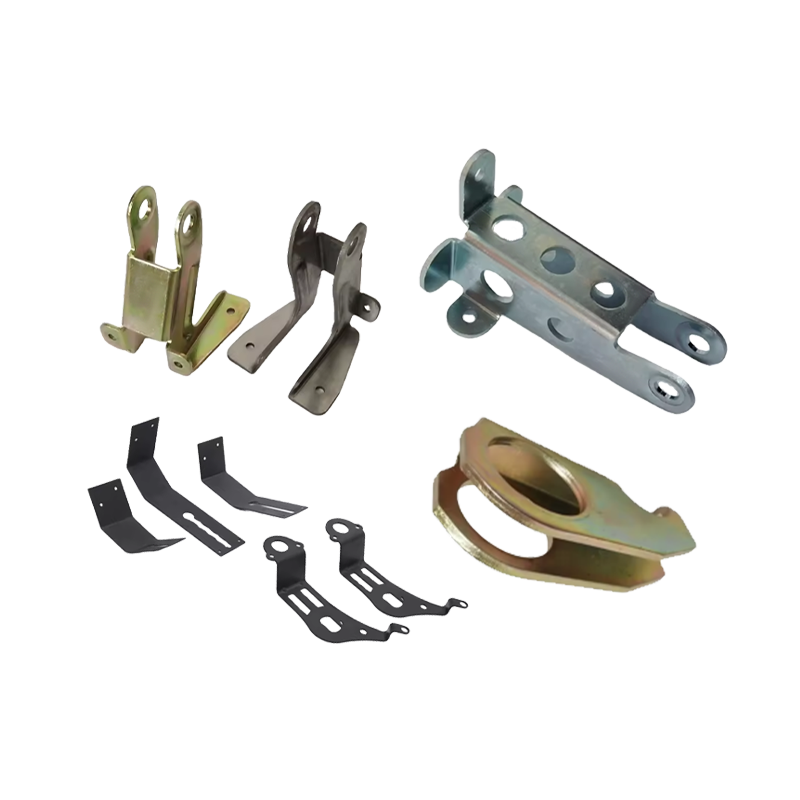 Custom Bending, Welding and Powder Coated Metal Frame PartsCustom metal frame components using bending, welding and powder coating, for projects where rail alignment, finish and structural connections need consistent fabrication.View Product →
Treads and mounting plates
Treads are usually stamped or drawn from stainless sheet between 1.5 mm and 3 mm thick, then given a raised pattern or anti slip perforation. Mounting plates and reinforcement washers are frequently produced on presses with capacities from 4T up to 1000T, which allows a single supplier to run thin cosmetic plates and heavy structural brackets on the same project. When plates are drawn rather than flat stamped, the added stiffness can remove the need for a separate backing plate behind the deck, which reduces both part count and installation time. A stainless stamping and bending line is the practical starting point for this kind of work.
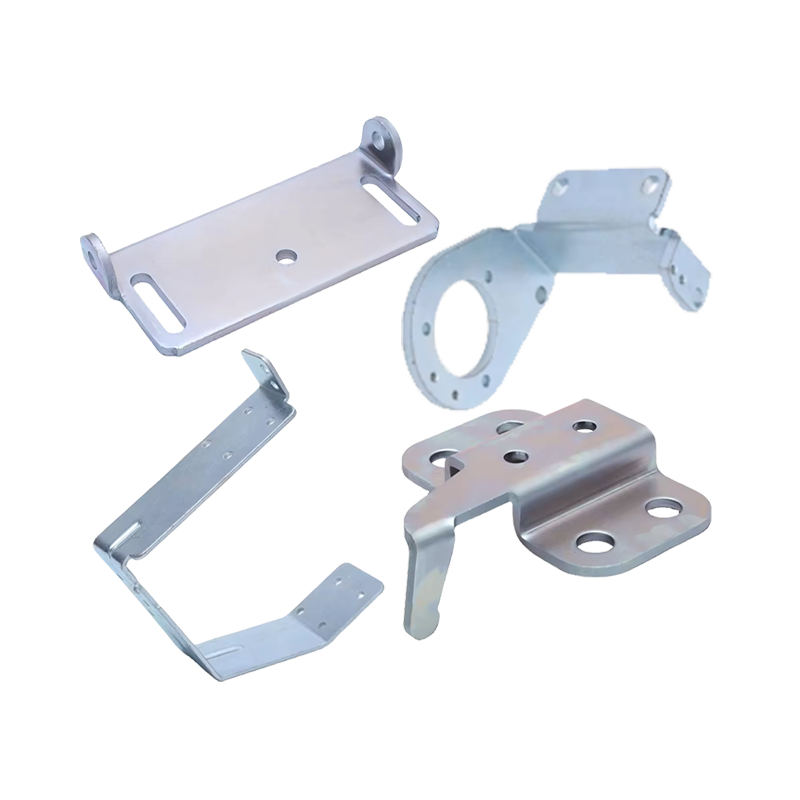 Custom Sheet Metal Stamping and Bending PartsOEM stamping and bending fabrication for carbon steel, stainless steel or aluminum parts, relevant where treads and mounting plates require reliable forming.View Product →
Brackets and anchor hardware
The small parts are the ones that fail in service. The pipe connection bracket that ties the rail to the pool wall or to the deck frame carries the entire bending moment of the ladder, so it should be specified with a material thickness of 3 mm or more, a hole pattern held to a tolerance of about 0.5 mm, and a finish that matches the rail. In many jurisdictions the metal ladder also has to be bonded to the pool equipotential grid, which means the bracket needs a clean, unpainted contact area and a drilled bonding point rather than a hole added on site with a hand drill.
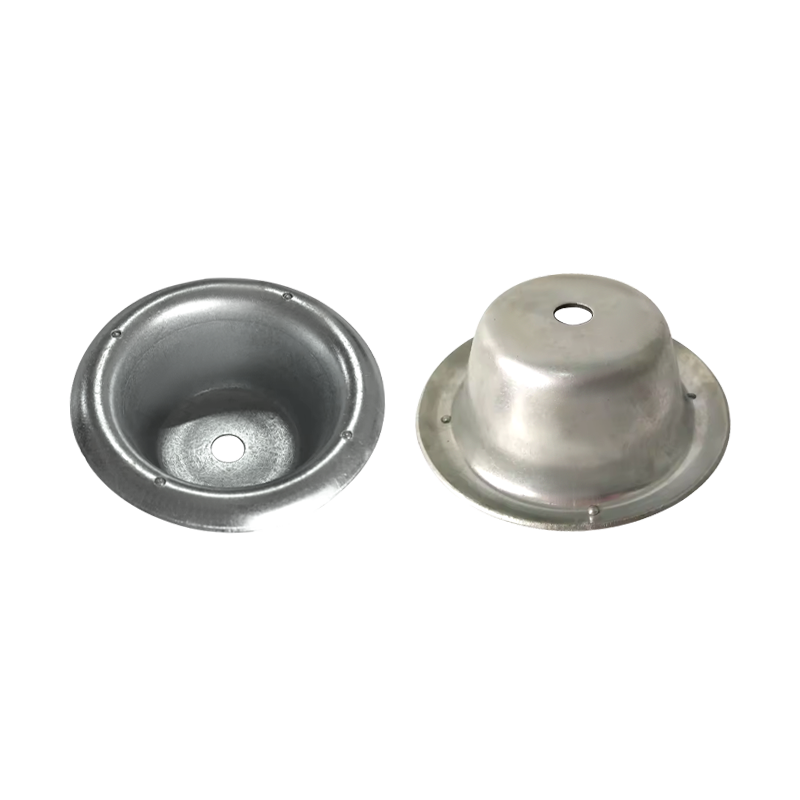 Precision Stamped Pipe Connection BracketsCustom stamped pipe connection brackets with material and finish options, for applications where bracket tolerance and corrosion resistance must be specified.View Product →
What Belongs on the Purchase Specification
A one page specification prevents most disputes. Before requesting quotes, confirm that the following items are written down and that the supplier confirms each one in writing.
- Material grade and certificate, with 304 and 316 stated separately rather than described as stainless steel.
- Tube outside diameter, wall thickness and allowable thinning at bends.
- Weld type, whether the joint is fully penetrated, and the required post weld treatment such as pickling or passivation.
- Load rating and whether a proof load test report is required for the finished assembly.
- Corrosion testing, for example salt spray hours to a recognized standard, if the product is going into a saltwater or coastal pool.
- Surface finish, including whether any part will be powder coated and how the coating will be masked at bonding and fastening points.
- Dimensional tolerances for hole positions, deck flange flatness and overall rail height.
- Packaging that protects the polished surface, plus a spare parts list for sockets, fasteners and tread covers.
Installation and Maintenance Items That Get Skipped
Even a well built ladder can be downgraded by the installation. The following points cover most of what goes wrong after delivery.
- Seal the deck penetration around each socket. Standing water in an unsealed hole is the single most common cause of early corrosion at the base of a rail.
- Check anchor torque values after the first month and again at the start of each season, because concrete anchors relax slightly as the deck cures and moves.
- Rinse the ladder with fresh water after heavy use in saltwater pools, and inspect the underside of treads where chloramines concentrate.
- Inspect weld toes for brown staining. Light staining can usually be removed with a stainless cleaner, but pitting that has penetrated the wall means the part should be replaced.
- Replace cracked rubber or plastic tread covers promptly. Water trapped under a loose cover holds chlorides against the metal for months.
- Re-check handrail height and extension after any deck resurfacing, because a raised deck changes the effective step geometry.
For a facility buyer, the practical sequence is short. Confirm the code path the pool has chosen, write down the load rating, rail diameter, tread depth, riser height and rail height, and state the alloy and post weld treatment clearly in the purchase order. For a distributor or an equipment brand adding a handicap pool ladder to a catalogue, the same list becomes a manufacturing brief, and the parts that carry the risk are the bent rails, the formed treads and the connection brackets that tie everything to the deck.
Ningbo Dasheng Metal Products Co., LTD. produces these kinds of metal components at its Ningbo factory, covering stamping, deep drawing, bending, welding, surface finishing and assembly on equipment from 4T mechanical presses up to 1000T hydraulic presses, with stamping sizes up to 1300 mm by 1000 mm and a material thickness capability of 20 mm. The plant holds ISO9001:2015 certification and runs its own tooling shop, so ladder kits and replacement parts can be built to a drawing, a sample or a target price point rather than adapted from a standard catalogue item.
related products
Send An Inquiry
Don't hesitate to contact when you need us!
Whether you want to become our partner or need our professional guidance or support in product selections and problem solutions, our experts are always ready to help within 12 hours globally
contact Us
Phone: +86 18157484296
FAX: +86 574-86150176
E-mail: [email protected]
Address: Unit 2, Building 19, Zhichuangzhizao Park, Chengdong Industrial Zone, Xiangshan, Ningbo,315705, Zhejiang, China
Product Category
Mobile