中文简体
中文简体 Español
Industry News
Aug 07,2026
How do pallet feet and nesting plugs work?
Content
- 1 The Anatomy of a Pallet Foot: Components and Geometry
- 2 How Nesting Plugs Function: The Mechanics of Stack Control
- 3 Types of Pallet Feet: Shapes, Materials, and What Drives the Choice
- 4 Load Distribution: How Pallet Feet Transfer Weight to the Floor
- 5 Nesting Plug Materials and Why They Matter More Than They Appear
- 6 Foot Configuration: 9-Foot, 6-Foot, and Custom Layouts
- 7 Fixing Methods: How Pallet Feet Are Attached to the Deck
- 8 Nesting Efficiency: What Stack Height Can You Realistically Achieve?
- 9 Surface Treatment and Corrosion Protection for Metal Pallet Feet
- 10 Regulatory and Standards Compliance for Pallet Feet Systems
- 11 Selecting the Right Pallet Foot and Nesting Plug: A Practical Decision Framework
- 12 Common Failure Modes and How to Prevent Them
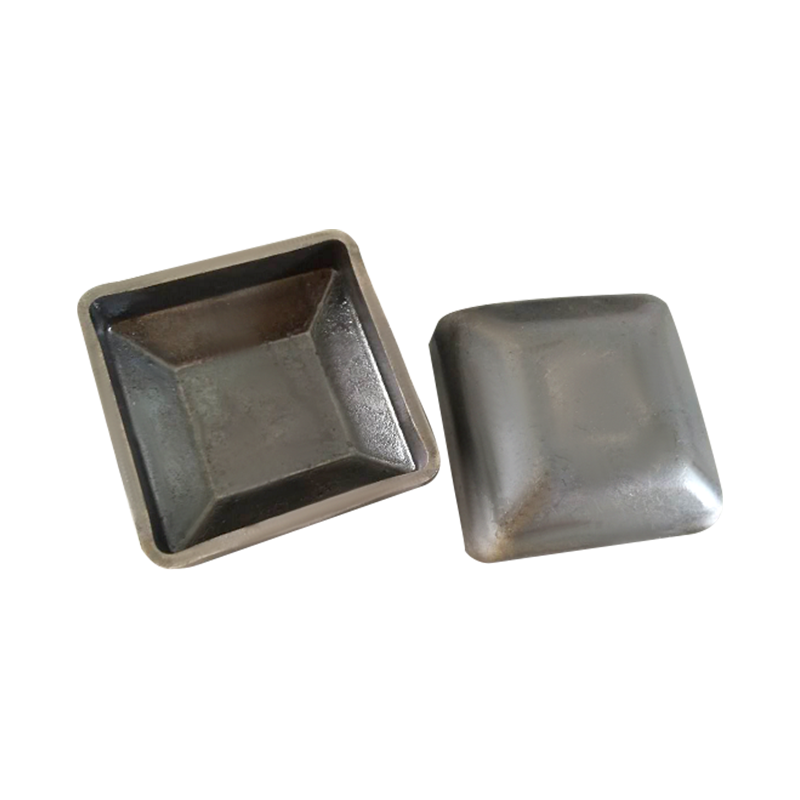
Pallet feet and nesting plugs work as a two-component elevation and stacking system. The pallet foot — a molded or pressed support block — is inserted into or attached to the underside corners and center of a pallet deck, raising the entire pallet structure off the floor to allow forklift tine entry. The nesting plug fits inside the hollow tube or socket of the pallet foot, locking adjacent stacked pallet feet together so that empty pallets can be stacked compactly without sliding apart.
In practical terms: the pallet foot carries the vertical load; the nesting plug controls horizontal movement during stacking. Together they transform a flat sheet or open-frame deck into a functional, stackable, fork-entry pallet — without the weight and cost of a full solid-block wooden pallet. This system is the mechanical basis of the majority of plastic and metal export pallets in use today.
The Anatomy of a Pallet Foot: Components and Geometry
A pallet foot is not a simple block. Its geometry is carefully engineered to perform three simultaneous functions: distributing the deck load to the floor, providing a defined forklift clearance height, and offering a nesting socket for empty-pallet stacking. Understanding each geometric feature explains why dimensional precision matters.
The Load-Bearing Shell
The outer shell of a pallet foot is typically a hollow truncated cone or rectangular tube with substantial wall thickness — commonly 3 mm to 6 mm for steel versions and 4 mm to 8 mm for structural plastic versions. The hollow interior reduces material cost and weight while the geometric shape (cone, cylinder, or tapered rectangle) distributes compressive load efficiently to the base flange. The base flange itself spreads point loads across a larger floor contact area, preventing the foot from punching through racking decks or soft flooring surfaces.
The Fork Clearance Height
Standard pallet feet are designed to provide a minimum clear height under the deck of 100 mm (approximately 3.9 inches), which satisfies the entry requirements for standard ISO 2330-compliant forklift tines. Some heavy-duty configurations extend to 120 mm or 150 mm to accommodate wider tines used in heavy-industrial applications. The clearance height is fixed by the foot height minus the deck thickness — a parameter that must be calculated at the design stage rather than adjusted in the field.
The Nesting Socket
The top of most pallet feet features an internal socket — a recessed cavity that accepts the nesting plug or the base of the foot above it in a stack. In a cone-type foot, the interior of the cone itself serves as the socket, and feet self-nest without a separate plug component. In a cylindrical or rectangular tubular foot, a discrete nesting plug is required to fill the socket and engage the foot above it, preventing lateral sliding of stacked empty pallets. The socket geometry determines how many pallets can be stacked safely — most systems are rated for 6 to 12 empty pallets per stack within the plug engagement zone.
How Nesting Plugs Function: The Mechanics of Stack Control
A nesting plug is an engineered insert — typically injection-molded from high-density polyethylene (HDPE), polypropylene (PP), or nylon (PA6/PA66) — that fits inside the top opening of a pallet foot and protrudes upward to engage the bottom opening of the foot directly above it in a stack.
The plug performs three mechanical functions simultaneously:
- Lateral restraint: The plug fills the annular gap between the inner walls of two stacked feet, preventing the upper pallet from shifting horizontally. Without the plug, even a minor floor vibration or slight incline can cause a stack of empty pallets to shift and fall — a significant safety hazard in warehouse environments.
- Load transfer in column stacking: When loaded pallets are column-stacked (one loaded pallet placed on another), the nesting plug transfers a portion of the vertical load through its body from the upper foot to the lower foot, reducing bending stress on the pallet deck. This plug-assisted load path is why some plastic pallet systems can column-stack at 30% to 50% higher loads than their rack load rating alone would suggest.
- Retention of the foot in the deck: Many nesting plug designs incorporate a barbed or flanged upper section that also serves to lock the pallet foot into the deck aperture from below, eliminating the need for separate fasteners. The plug passes through the foot tube and the deck opening, then expands or locks against the deck surface to hold the foot in place.
The interference fit between plug and socket is deliberately specified at 0.1 mm to 0.4 mm radial interference in most precision-molded systems, generating enough friction retention to resist accidental displacement while still allowing manual disassembly for replacement.
Types of Pallet Feet: Shapes, Materials, and What Drives the Choice
Pallet feet are not a single product but a family of components differentiated by shape, material, and fixing method. Each combination has a specific performance profile suited to defined applications.
| Type | Material | Typical Load Rating (static) | Nesting Method | Typical Application |
| Conical foot | Galvanized steel / stainless steel | 2,000 kg to 6,000 kg per foot | Self-nesting (cone into cone) | Export metal pallets, heavy engineering |
| Cylindrical tube foot | Steel tube, powder-coated | 1,500 kg to 4,000 kg per foot | Plug-nesting (plug required) | Automotive supply chains, reusable pallets |
| Rectangular block foot | HDPE or PP injection-molded | 800 kg to 2,500 kg per foot | Plug-nesting or self-nesting | Plastic export pallets, food and pharma |
| Flat-base snap foot | Recycled HDPE or PP | 500 kg to 1,500 kg per foot | Snap-lock into deck aperture | Light-duty display pallets, retail logistics |
| Stainless steel sanitary foot | 304 or 316L stainless steel | 2,000 kg to 5,000 kg per foot | Plug-nesting (FDA-grade plug) | Food processing, pharmaceutical, cleanroom |
Source: Load ratings are representative values compiled from ISO 8611-1 (pallets for materials handling) test methodology documentation. Actual rated values vary by manufacturer and specific foot geometry.
Steel vs. Plastic Feet: The Core Trade-Off
Steel pallet feet offer substantially higher compressive strength per unit of material and can be welded, bolted, or riveted to steel decks for a permanent, high-load structure. The trade-off is weight — a standard 9-foot steel export pallet with steel conical feet weighs 18 kg to 30 kg depending on deck gauge, compared to 8 kg to 14 kg for an equivalent plastic pallet system with HDPE feet. In high-volume export scenarios where freight weight is a direct cost, this difference is significant.
Plastic feet, by contrast, are inherently corrosion-resistant, do not rust under high-humidity or wet-wash conditions, and can be produced in food-grade resins that comply with EU Regulation No. 10/2011 or FDA 21 CFR standards. For industries operating under strict hygiene protocols, plastic or stainless steel feet are frequently mandatory.
Load Distribution: How Pallet Feet Transfer Weight to the Floor
The load path through a pallet foot system is more complex than it first appears. When a loaded pallet sits on the floor, the total load follows this path: cargo weight presses down on the pallet deck, the deck transfers load through bending to the foot attachment points, and each foot compresses against the floor surface through its base flange.
The critical design variable is foot base area relative to the floor surface bearing capacity. A standard 100 mm diameter steel conical foot with a 120 mm base flange distributes load over approximately 113 cm2. A 2,000 kg static load across nine feet generates roughly 222 kg per foot or approximately 1.96 kg/cm2 floor bearing pressure — well within the capacity of most concrete warehouse floors (typically rated at 3 kg/cm2 to 8 kg/cm2 for industrial slabs). However, on racking decks with open-bar construction, the same calculation may produce localized pressures that exceed the racking bar's allowable load — making foot base geometry a critical specification parameter in racking applications.
Source: Floor bearing capacity reference values from EN 15512:2020 (Steel static storage systems — adjustable pallet racking systems — principles for structural design).
Dynamic vs. Static Load Ratings
Pallet foot load ratings are almost always expressed as static values — the maximum load when the pallet is stationary on a flat, even surface. Dynamic ratings (the load a pallet and its feet can withstand while being moved by forklift) are typically 50% to 67% of the static rating, reflecting the shock loading that occurs when a forklift sets down a loaded pallet imperfectly or traverses uneven floor joints. When specifying feet for heavy applications, always confirm both static and dynamic ratings with the manufacturer and apply an appropriate safety factor — the European Pallet Association (EPAL) recommends a minimum safety factor of 1.5 for racking applications.
Nesting Plug Materials and Why They Matter More Than They Appear
The nesting plug is often treated as an afterthought — a small plastic component that costs a fraction of the pallet foot itself. In practice, plug material selection has outsized consequences for the long-term performance of the pallet system.
| Plug Material | Compressive Strength | Temperature Range | Chemical Resistance | Typical Application |
| HDPE | 18 MPa to 26 MPa | -40 degrees C to +80 degrees C | Excellent (most chemicals) | General industrial, export pallets |
| Polypropylene (PP) | 30 MPa to 40 MPa | -20 degrees C to +100 degrees C | Good (avoid oxidizing acids) | Higher-load industrial applications |
| Nylon PA66 | 70 MPa to 90 MPa | -40 degrees C to +120 degrees C | Good (absorbs moisture) | High-load, elevated temperature |
| Glass-filled PP | 60 MPa to 80 MPa | -20 degrees C to +110 degrees C | Good | Heavy-duty automotive, industrial racks |
| Rubber (NBR/EPDM) | Low (10 MPa to 15 MPa) | -30 degrees C to +100 degrees C | Excellent (vibration damping) | Anti-vibration, precision equipment pallets |
Source: Compressive strength values from ISO 604 (plastics, compression properties) material datasheets. Temperature ranges reflect continuous service limits, not short-term peak exposure.
A common field failure mode is plug creep — gradual permanent deformation of the plug body under sustained compressive load over months or years. This is particularly problematic with HDPE plugs in high-static-load column stacking situations. Specifying a glass-filled PP or PA66 plug adds marginal cost but can extend service life by a factor of three to five times in demanding conditions.
Foot Configuration: 9-Foot, 6-Foot, and Custom Layouts
The spatial arrangement of pallet feet across the pallet deck directly determines forklift entry direction, load distribution evenness, and racking compatibility. Three configurations dominate industrial use.
9-Foot Configuration (Standard)
Nine feet arranged in a 3x3 grid — four corner feet, four edge mid-span feet, and one center foot — is the most common layout for square and near-square pallets. This configuration provides four-way forklift entry (tines can enter from any of the four sides), maximizes deck support, and aligns with the ISO 6780 standard footprint for 1200 x 1000 mm pallets. The center foot plays a disproportionately important role in racking: without it, mid-span deck deflection under load can exceed allowable limits, even when the corner feet are significantly oversized.
6-Foot Configuration (Two-Way Entry)
Six feet in two rows of three provide two-way forklift entry only (from the two short ends of the pallet). This configuration is used when forklift approach direction is fixed by the facility layout and where the cost or weight saving from eliminating three feet is operationally significant. Two-way entry pallets with 6-foot layouts are common in rail freight, narrow-aisle warehouses, and production line sequencing applications where pallets always travel in a single direction.
Custom and Perimeter Foot Layouts
For non-standard pallet sizes, very high loads, or specialty racking systems, custom foot layouts are engineered from first principles — typically using finite element analysis (FEA) of the deck panel under the expected load case to determine optimal foot placement that keeps deck deflection within the allowable limit (usually L/200, where L is the span between feet). Our pallet feet and nesting plugs are available with custom foot position punching to match non-standard deck layouts for OEM and project-specific applications.
Fixing Methods: How Pallet Feet Are Attached to the Deck
The method by which a pallet foot is attached to its deck determines not only initial strength but also the ease and cost of foot replacement when individual feet are damaged in service. Five primary fixing methods are in common use:
- Welding (steel-to-steel): The most permanent and highest-strength attachment for steel feet on steel decks. Typically MIG or resistance (spot) welded. Weld quality must be inspected to ISO 5817 Level B or equivalent to ensure the foot-to-deck joint can withstand forklift dynamic loading. Not suitable for on-site replacement without cutting equipment.
- Bolting / riveting: Allows field replacement of damaged individual feet without specialized equipment. Bolted connections typically use M8 to M12 structural fasteners with locking nuts. A properly torqued bolted foot connection (typically 25 Nm to 40 Nm for M8 hardware) achieves 80% to 90% of the strength of an equivalent welded connection under static load, per internal testing referenced in EN 13155 (non-fixed load lifting attachments).
- Snap-fit / press-fit into deck aperture: Common for plastic pallet systems. The foot body has an interference-fit collar that is pressed into a pre-punched deck aperture, with the nesting plug then inserted through the foot and deck to lock the assembly. This method enables rapid foot replacement in under two minutes without tools — a significant maintenance advantage in high-throughput logistics environments.
- Adhesive bonding: Used in specialty applications such as attaching plastic feet to composite or plywood decks. Requires thorough surface preparation and cure time. Not recommended as the sole fixing method for dynamic applications; typically used in combination with mechanical fasteners.
- Integrated molding: In fully injection-molded plastic pallets, the feet and deck are a single co-molded unit with no separate attachment. Eliminates the fixity failure mode entirely but makes individual foot replacement impossible — the entire pallet must be replaced when a foot is damaged.
Nesting Efficiency: What Stack Height Can You Realistically Achieve?
One of the primary economic justifications for using a pallet foot and nesting plug system over solid-block pallets is the superior empty-pallet nesting ratio — the reduction in storage volume achieved when stacking empty pallets. A solid 150 mm block pallet does not nest at all: ten empty pallets stacked occupy ten times the height of one pallet. A conical-foot or plug-nesting system reduces this dramatically.
Typical nesting ratios achieved in practice:
- Conical self-nesting foot (steel): Each additional empty pallet adds approximately 25 mm to 40 mm to stack height, depending on cone geometry. A stack of 10 empty pallets with 100 mm foot height and 30 mm nesting drop occupies approximately 370 mm total — compared to 1,000 mm for non-nesting equivalents. This represents a 63% reduction in empty storage volume.
- Plug-nesting cylindrical foot: Nesting drop depends on plug penetration depth. A 50 mm engagement plug in a 100 mm tall foot allows a 50 mm nesting drop. Ten empty pallets in this system occupy 550 mm — a 45% storage volume reduction versus non-nesting.
- Non-nesting block foot or solid block pallet: Zero nesting — each pallet must be treated as full height. Storage efficiency for empty pallets is five to ten times lower than a cone-nest system.
For a warehouse handling 500 pallet returns per week, the difference between a 63% nesting system and a non-nesting system can equate to over 15 square meters of recovered floor space per storage row — a figure that translates directly to operational cost when floor space is valued at market rates.
Surface Treatment and Corrosion Protection for Metal Pallet Feet
Steel pallet feet are almost always surface-treated to resist corrosion, which — in warehousing and logistics environments — can be aggressive due to high humidity, condensation cycles, salt used in road de-icing (which contaminates inbound pallets), and chemical spills.
| Surface Treatment | Salt Spray Resistance (ISO 9227) | Cost Premium vs. Bare Steel | Suitable For |
| Hot-dip galvanizing | 500 to 1,000+ hours | 15% to 25% | Outdoor storage, marine logistics |
| Electro-zinc plating | 96 to 200 hours | 8% to 15% | Indoor warehouse, controlled environments |
| Powder coating (polyester) | 400 to 800 hours (with primer) | 20% to 35% | Visible pallets, branding requirements |
| Epoxy primer + topcoat | 600 to 1,200 hours | 30% to 50% | Chemical-exposure environments |
| 304 stainless steel (no treatment) | 1,000+ hours | 80% to 150% above carbon steel | Food processing, pharmaceutical, washdown |
Source: Salt spray resistance values referenced from ISO 9227 (corrosion tests in artificial atmospheres) and typical supplier technical data. Actual performance depends on coating quality, edge coverage, and service conditions.
For export pallets travelling through multiple humidity and temperature zones, hot-dip galvanizing remains the most cost-effective corrosion protection for carbon steel pallet feet. The zinc layer thickness of 45 microns to 85 microns achieved by hot-dip galvanizing provides genuine barrier and sacrificial protection that electro-plating alone cannot match.
Regulatory and Standards Compliance for Pallet Feet Systems
Pallet systems used in international trade, food handling, or racking installations are subject to a range of technical standards that govern dimensions, load performance, and hygiene. Understanding which standards apply to your application avoids costly non-compliance after procurement.
- ISO 6780: Defines the principal dimensions and tolerances for flat pallets for intercontinental materials handling. The two standard footprints are 1200 x 1000 mm (used in Europe, Asia, and export) and 1219 x 1016 mm (North American standard). Pallet feet must be positioned to satisfy both the minimum forklift entry clearance (100 mm) and the maximum foot protrusion beyond the deck edge specified in this standard.
- ISO 8611-1 and ISO 8611-2: Specify the test methods for pallet performance evaluation including bending tests, compression tests, and racking tests. Foot and plug assemblies must perform within the load limits confirmed by ISO 8611 testing for the pallet system's stated ratings to be valid.
- EN 15512:2020: Governs adjustable steel pallet racking systems. Pallet foot base dimensions must clear racking beam step heights and must not bridge racking beams in a way that invalidates the beam's stated load capacity.
- ISPM 15 (phytosanitary standard): Requires that wooden pallet components used in international trade be heat-treated or fumigated. Metal and plastic pallet foot and nesting plug systems are inherently ISPM 15-exempt, which is a significant advantage for export pallets — eliminating treatment cost, documentation burden, and re-inspection requirements at customs. This is one of the strongest practical arguments for metal or plastic pallet feet over wood block systems in export logistics.
- EU Regulation No. 10/2011 and FDA 21 CFR: Apply to any pallet foot or nesting plug that comes into direct or indirect contact with food. Specification of a food-contact-grade resin and documentation of compliance must be obtained from the foot manufacturer when the pallet is used in food processing, pharmaceutical packaging, or similar hygienic environments.
Selecting the Right Pallet Foot and Nesting Plug: A Practical Decision Framework
With the functional principles understood, the procurement decision reduces to matching five parameters to the application. Work through them in sequence:
- Load requirement: Determine the maximum static load per pallet (total cargo weight divided by number of simultaneously loaded pallets). Add a minimum 1.5x safety factor to establish the required foot static load rating. Confirm whether column stacking or racking will be used, as these impose additional constraints.
- Environment: Identify the humidity, temperature range, chemical exposure, and hygiene requirements of the operating environment. This drives the choice between carbon steel, galvanized steel, stainless steel, or plastic feet and plugs.
- Forklift entry requirement: Confirm whether two-way or four-way forklift entry is required. Four-way entry requires a 9-foot or similar layout with feet positioned to leave clear 100 mm tine paths from all four sides.
- Nesting ratio priority: If empty pallet return volume or storage cost is significant, prioritize a high-nesting-ratio design — conical self-nesting feet or a deep-engagement plug-nesting system. If empty pallets are always flat-transported and not stacked, nesting ratio is secondary.
- Maintenance strategy: Decide whether individual feet will be field-replaced when damaged (favoring bolted or snap-fit feet) or whether full pallet replacement is the maintenance approach (favoring welded or integrated construction). Replacement foot and plug availability from the supplier is a critical long-term supply chain consideration.
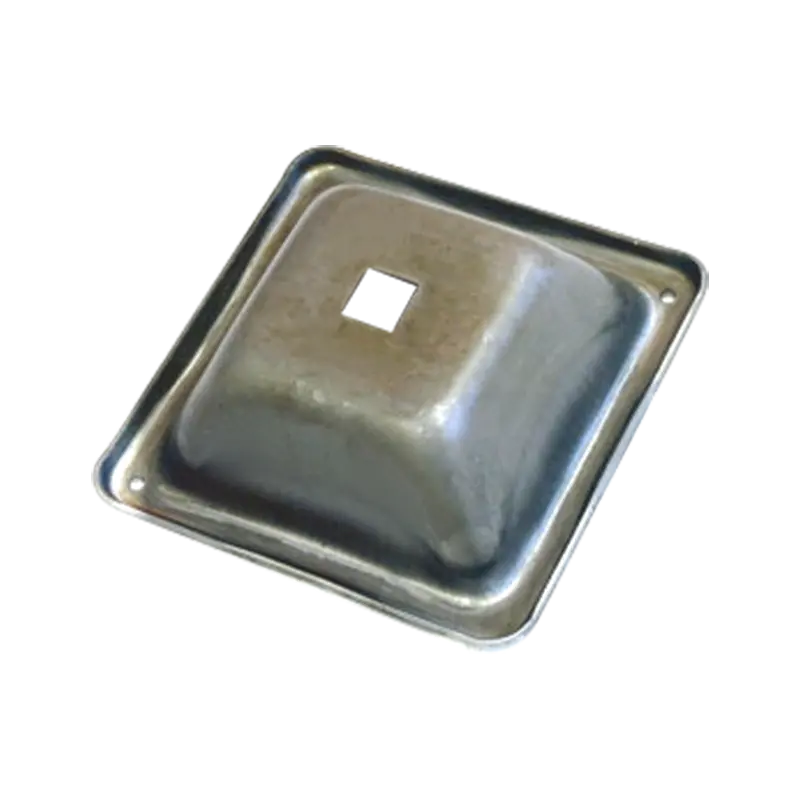
For a comprehensive range of steel and stainless steel configurations — including conical nesting feet, cylindrical plug-nesting feet, and matching replacement nesting plugs suitable for both standard and custom deck configurations — our pallet feet and nesting plugs product range covers the full spectrum of industrial pallet foot requirements from light-duty export pallets through to heavy engineering and food-grade applications.
Common Failure Modes and How to Prevent Them
Understanding how pallet feet and nesting plugs fail in service allows preventive action to be taken at the design and procurement stage rather than after operational problems appear.
| Failure Mode | Root Cause | Consequence | Prevention |
| Foot buckling under overload | Static or dynamic load exceeds foot compressive rating | Pallet collapse, cargo damage, injury risk | Apply 1.5x safety factor; confirm dynamic rating |
| Weld failure at deck junction | Undercutting, porosity, or insufficient weld throat | Foot separates from deck under load | Specify ISO 5817 Level B weld quality; inspect on delivery |
| Plug creep and loss of retention | Wrong plug material for sustained load and temperature | Stacked empty pallets slide and fall | Specify PP or PA66 plug for sustained load; HDPE for light duty only |
| Corrosion of steel foot base | Inadequate surface treatment, floor chemical exposure | Gradual section loss, eventual structural failure | Hot-dip galvanize for wet environments; inspect annually |
| Plug loss in service | Insufficient interference fit; vibration in transport | Nesting function lost; foreign object contamination risk | Specify plug with retaining flange; verify interference fit at procurement |
| Foot impact damage from forklift | Tine misalignment during pickup or set-down | Foot deformation; loss of load-bearing capacity | Specify feet with impact-resistant geometry; retrain forklift operators |
Can pallet feet and nesting plugs improve pallet stability?
How to Choose High-Quality Metal Stamping Parts?
related products
Send An Inquiry
Don't hesitate to contact when you need us!
Whether you want to become our partner or need our professional guidance or support in product selections and problem solutions, our experts are always ready to help within 12 hours globally
contact Us
Phone:+86 139-5824-9488
FAX :+86 574-86150176
E-mail: [email protected] [email protected]
Address: Unit 2, Building 19, Zhichuangzhizao Park, Chengdong Industrial Zone, Xiangshan, Ningbo,315705, Zhejiang, China
Product Category
Mobile